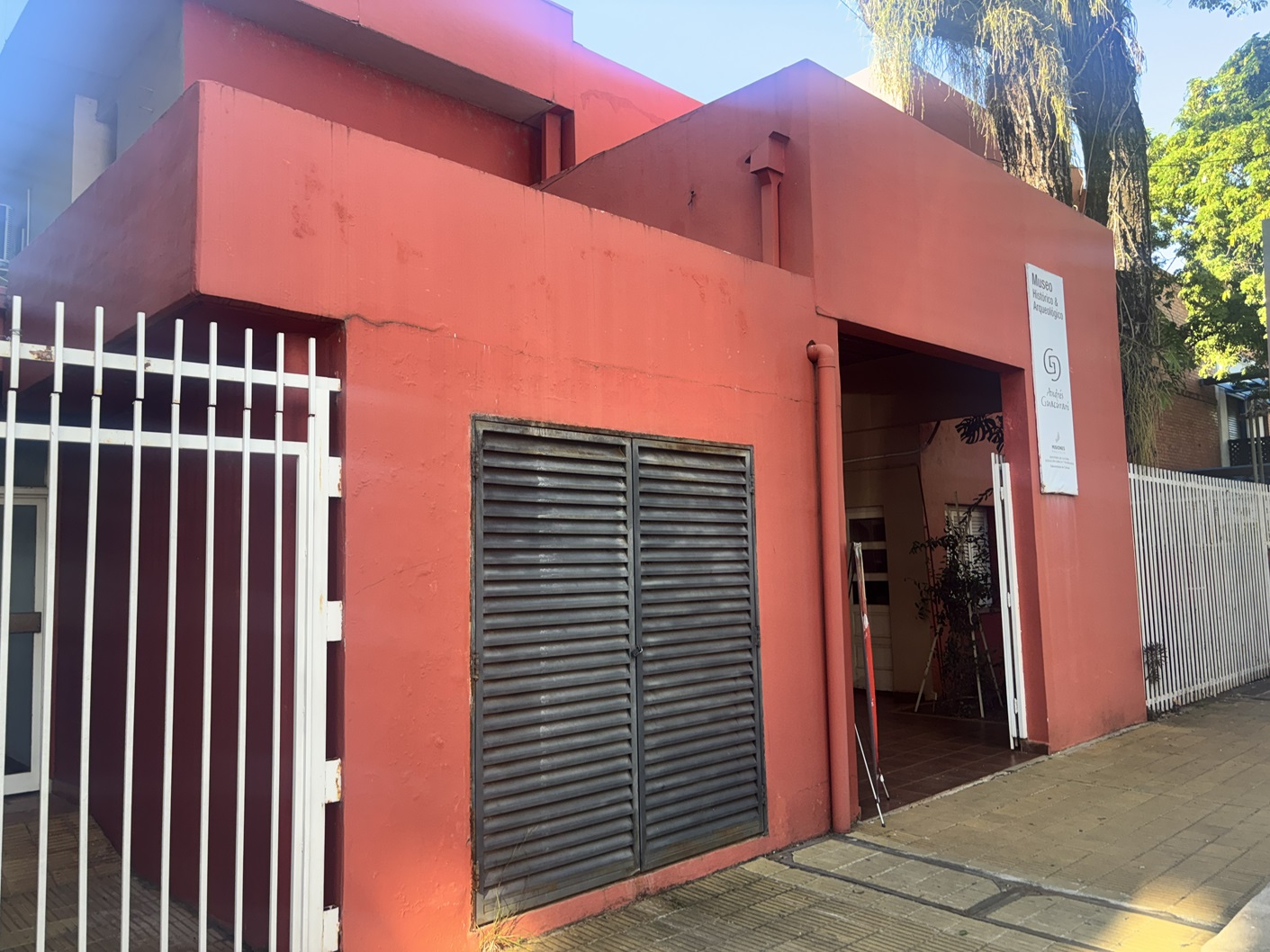
If you want to understand Misiones as it once was, the Museo Histórico y Arqueológico Andrés Guacurarí in Posadas is one of the best places to start.
Its exhibition traces the story of the province from prehistoric times and the Guaraní people through the era of the Jesuit missions. Rather than focusing on a single period, the museum provides the broader historical context that brings many of the province’s best-known attractions into perspective.
The Story Behind the Museum
Founded in 1978, the Museo Histórico y Arqueológico Andrés Guacurarí was the first museum established by the provincial government of Misiones. Its original collections were built around donations from historians, archaeologists, and private collectors, including Romanian immigrant Miguel Nadasdy, whose passion for preserving the region’s heritage helped lay the foundations of the museum. In 1984, the institution moved to its current home in central Posadas, where it continues to serve as the province’s principal museum of history and archaeology.

Named after Andrés Guacurarí y Artigas, better known as Andresito, the museum honours one of the most important figures in the history of Misiones. A Guaraní leader and commander during the independence era, Andresito became the only Indigenous governor in the history of the former United Provinces of the Río de la Plata.
Today, he is regarded as a provincial hero, and the museum reflects that legacy while telling a much broader story.
Rather than focusing on a single person or historical period, the museum traces the development of Misiones over thousands of years.
A Walk Through the Museum
Although the Museo Histórico y Arqueológico Andrés Guacurarí is relatively small, its exhibition is arranged in a clear chronological sequence that makes the visit easy to follow. Rather than overwhelming visitors with countless display cases, the museum focuses on telling the story of Misiones step by step. Throughout the galleries, QR codes provide access to short audio guides that explain the exhibits in greater detail. At the time of writing, these recordings are available in Spanish only, but even non-Spanish speakers may find them useful when combined with a translation app.

The visit begins in the first gallery, where archaeological finds introduce the earliest inhabitants of the region. Stone tools and other artefacts tell the story of the hunter-gatherer communities that lived in what is now Misiones thousands of years before written history, offering an insight into the province’s earliest human settlement.

The second gallery continues this journey through prehistory, presenting later communities that combined hunting, fishing, and gathering with early horticulture. Displays of pottery, stone tools and decorated ceramics illustrate both everyday life and ritual practices, showing how these societies gradually developed before the arrival of Europeans.
The third gallery shifts from archaeology to ethnography.

Here, objects from Guaraní and Guayakí communities highlight traditions that have survived into the present day. The exhibition also includes examples of historical archaeology and a reconstructed archaeological excavation, helping visitors understand how researchers uncover and interpret the province’s past.
A staircase then leads to the upper floor, where the final gallery is dedicated to the Jesuit-Guaraní missions.
Religious art, archaeological finds, and historical objects from the seventeenth and eighteenth centuries illustrate one of the defining chapters in the history of Misiones and provide valuable context before visiting sites such as San Ignacio Miní or Santa Ana.

Also on the upper floor is a small auditorium used for lectures, educational programmes and temporary exhibitions, reinforcing the museum’s role not only as a place to preserve history but also as a centre for research and cultural exchange.

Practical Information
Location: Gral. Paz 1865, N3301 Posadas, Misiones
Opening hours: Monday to Friday, 7:30 a.m. – 12:30 p.m. and 2:00 p.m. – 7:30 p.m. The museum is closed on Saturdays and Sundays.
Admission: Entry is free.
Is It Worth Visiting?
The Museo Histórico y Arqueológico Andrés Guacurarí is not a large museum, nor does it rely on spectacular exhibits or interactive displays. Its strength lies elsewhere. In just a few galleries, it provides an accessible introduction to the people, cultures and events that shaped Misiones, offering valuable context for many of the places visitors explore throughout the province.
One of the museum’s greatest strengths is its staff. During my visits, they were exceptionally knowledgeable, welcoming, and genuinely passionate about the history of Misiones. Visitors who show an interest are often happy to have questions answered, and staff may even guide them through the exhibition, sharing additional stories and historical context that go far beyond the information on the display panels.
If you’re planning to visit the Jesuit Missions, learn more about the Guaraní, or simply understand the province beyond its waterfalls and landscapes, this museum is one of the best places to begin. Best of all, admission is free, making it one of Posadas‘ most rewarding cultural attractions.


Leave a Reply