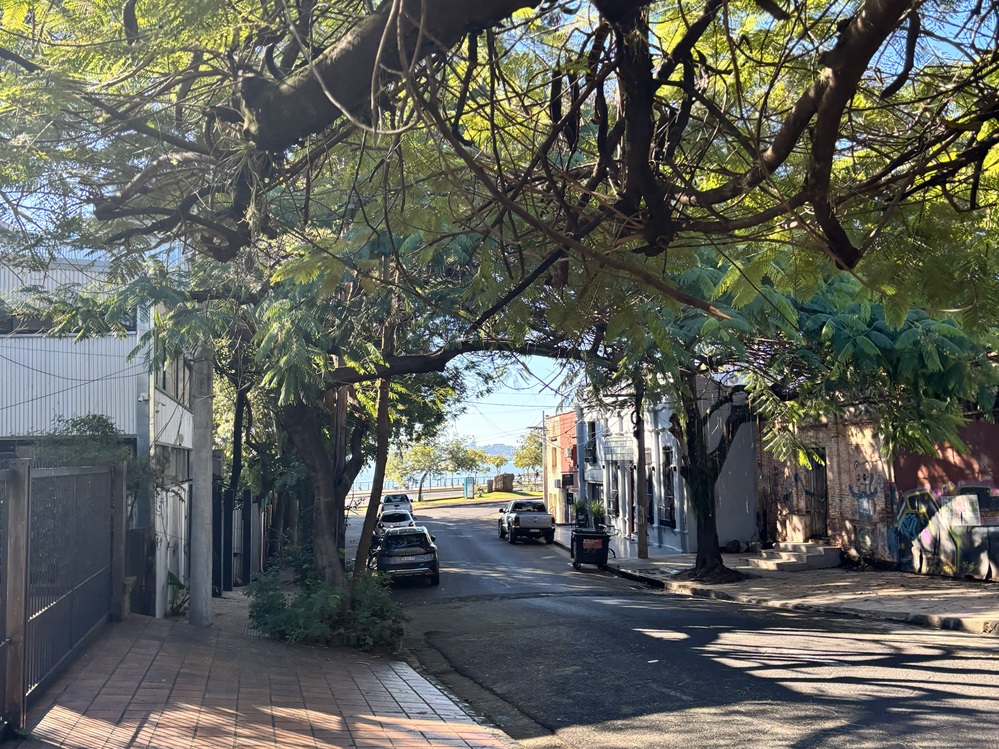
Bajada Vieja is one of the most distinctive streets in Posadas, the capital of Argentina’s Misiones province. The short but steep street connects the upper part of the city with the Paraná River, and today it is known for its colorful murals, restored houses, and lively cultural atmosphere.
While it has become a pleasant place to stroll, take photos, and discover local art, Bajada Vieja also carries a long and complex history tied to the river, the port, and the people who once passed through this part of the city.
A Historic Descent to the River
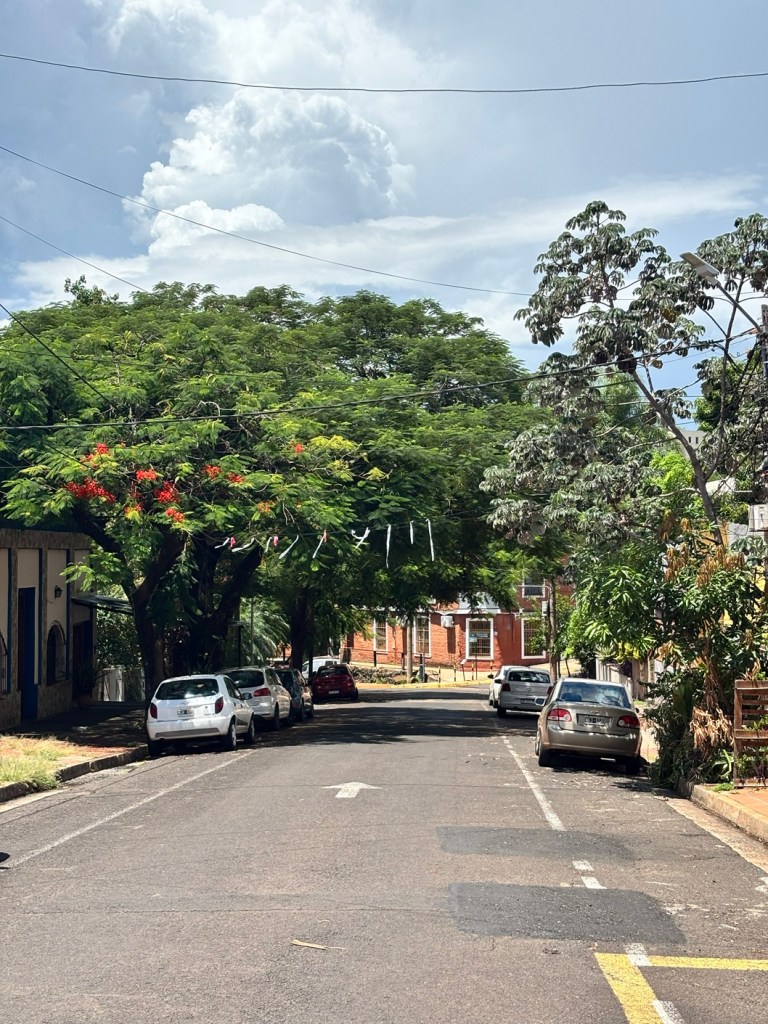
The name Bajada Vieja literally means “old slope,” and that is exactly what the street originally was: one of the main paths leading down to the old port of Posadas.
Before bridges and highways connected the region, the Paraná River served as the main transportation route in Misiones. Boats carried goods, workers, and travelers along the river, and Bajada Vieja linked the port with the higher parts of the city.
Because of this strategic position, the area developed into a lively port neighborhood. Dock workers, fishermen, merchants, and travelers moved through the street every day, giving it a reputation as one of the busiest and most colorful parts of early Posadas.
The World of the Mensú
Bajada Vieja is also connected to the history of the mensú, the laborers who worked in the yerba mate plantations and timber camps deep in the forests of Misiones during the late 19th and early 20th centuries.
Many of these workers passed through Posadas on their journeys along the Paraná River. The port area near Bajada Vieja was often a point of arrival or departure for men heading to the interior of the province to work in extremely harsh conditions.
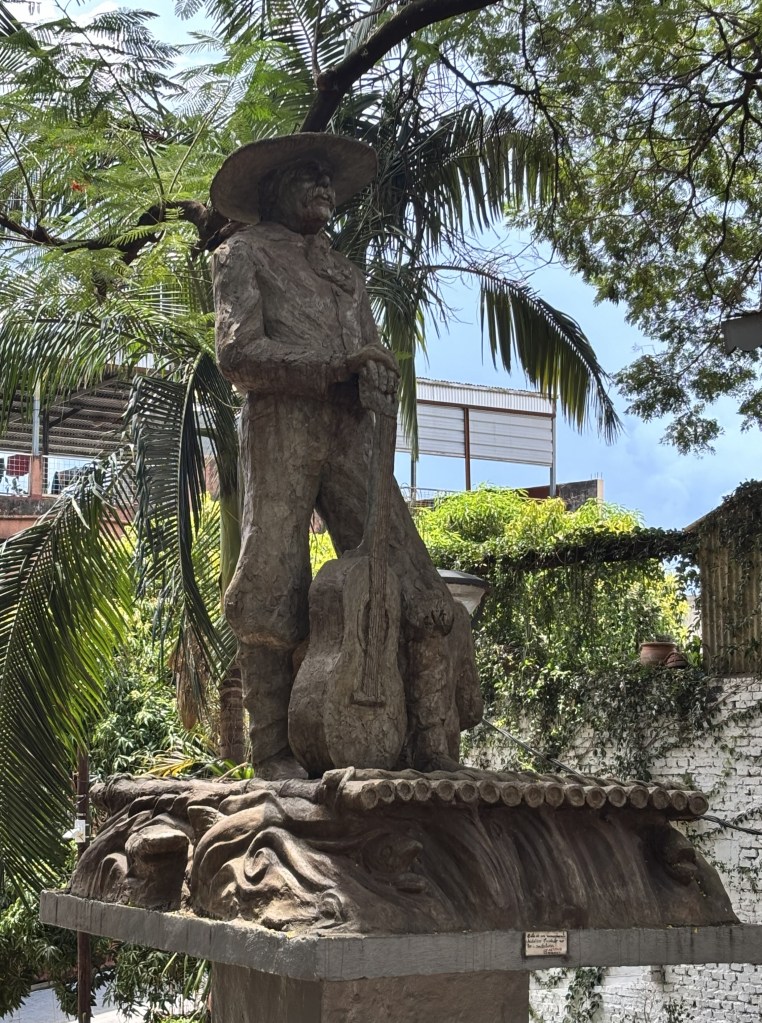
Not far from the street today stands the Paseo del Mensú, a monument that commemorates these workers and remembers their role in shaping the economic and social history of the region.
When the Street Was Called Calle Fleming
For a period in the 20th century, Bajada Vieja was officially renamed Calle Fleming. The name referred to Alexander Fleming, the scientist who discovered penicillin, one of the most important medical breakthroughs of the modern era.
The choice of this name was not entirely accidental. In its early days as a port district, the area around Bajada Vieja had a reputation for nightlife and entertainment that catered to sailors, dock workers, and travelers passing through the city.
Like many port neighborhoods around the world, this environment also brought serious public health challenges. When antibiotics such as penicillin became available in the mid-20th century, they dramatically changed the treatment of infectious diseases that had long affected port cities and their populations.
Although the street was officially named Calle Fleming for some time, locals continued to refer to it by its historic name.
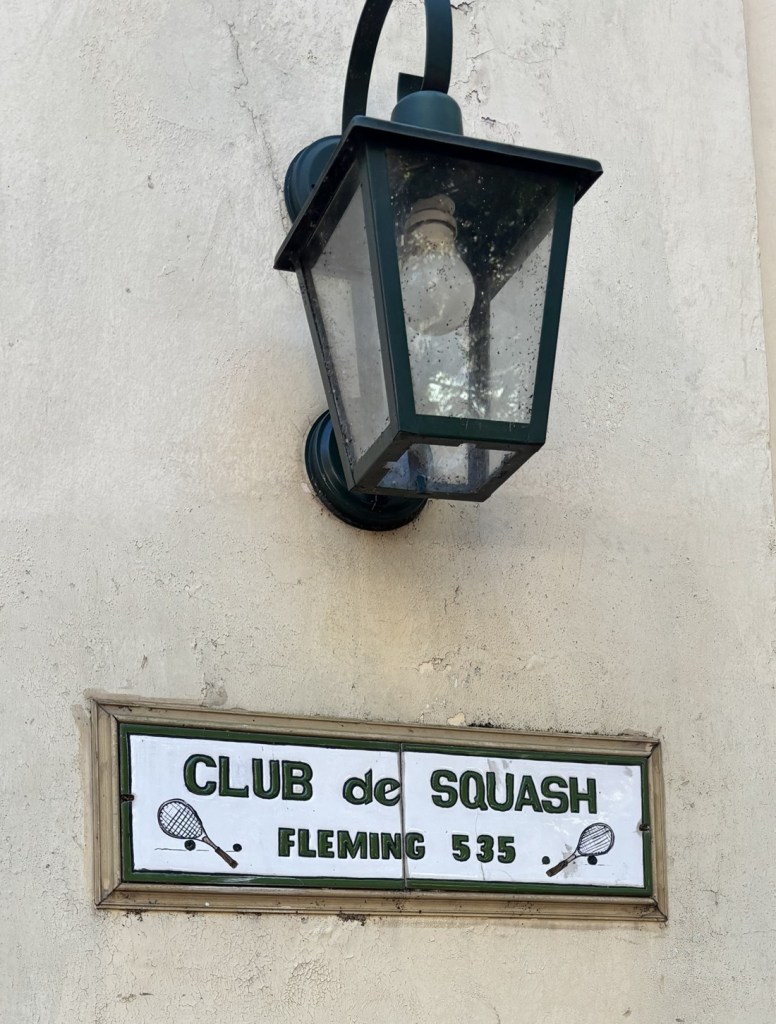
Today, the street is once again officially called Bajada Vieja, and modern street signs throughout the area reflect this historic name. However, traces of the former name can still be found on a few buildings, for example, on older plaques or business signs that still mention Fleming.
A Street Reborn
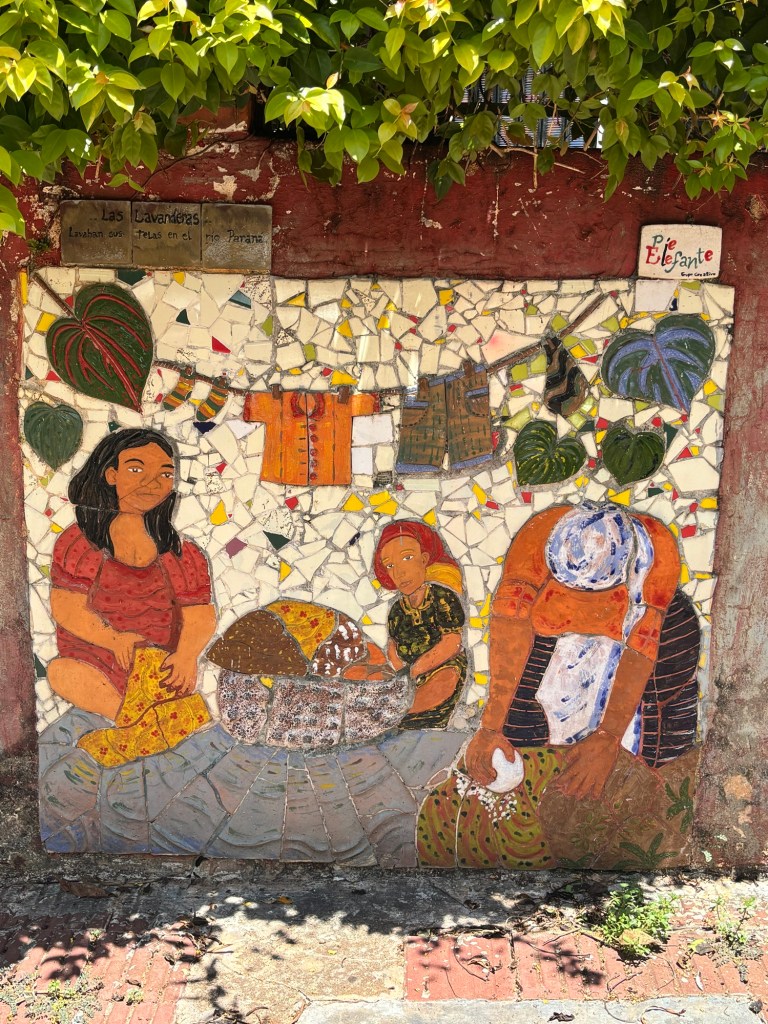
In recent years, Bajada Vieja has been carefully restored and transformed into one of the most visually striking streets in Posadas. Colorful murals now cover many of the buildings, turning the area into an informal open-air gallery that celebrates the culture and history of Misiones.
Today, visitors will find:
- large street art murals
- restored historic houses
- occasional cultural events and live music
The street’s artistic revival has turned it into a popular place for locals and visitors alike.
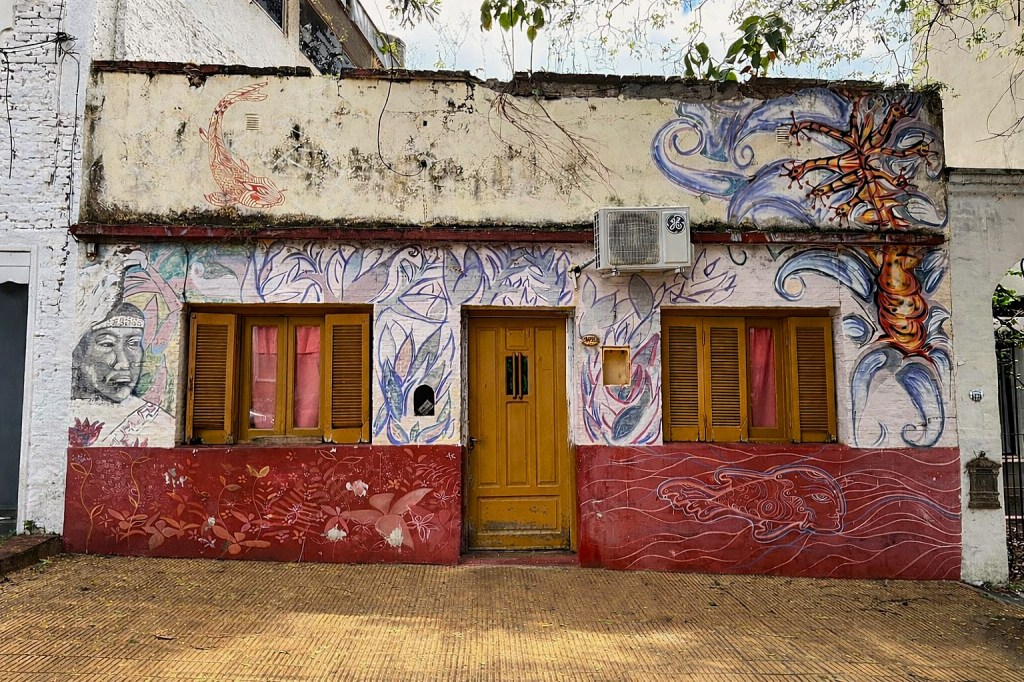
A Piece of the Soul of Posadas
Despite its short length, Bajada Vieja tells an important story about Posadas. It reflects the city’s relationship with the Paraná River, the lives of the mensú and dock workers who passed through the port, and the cultural transformations that have shaped the city over time.
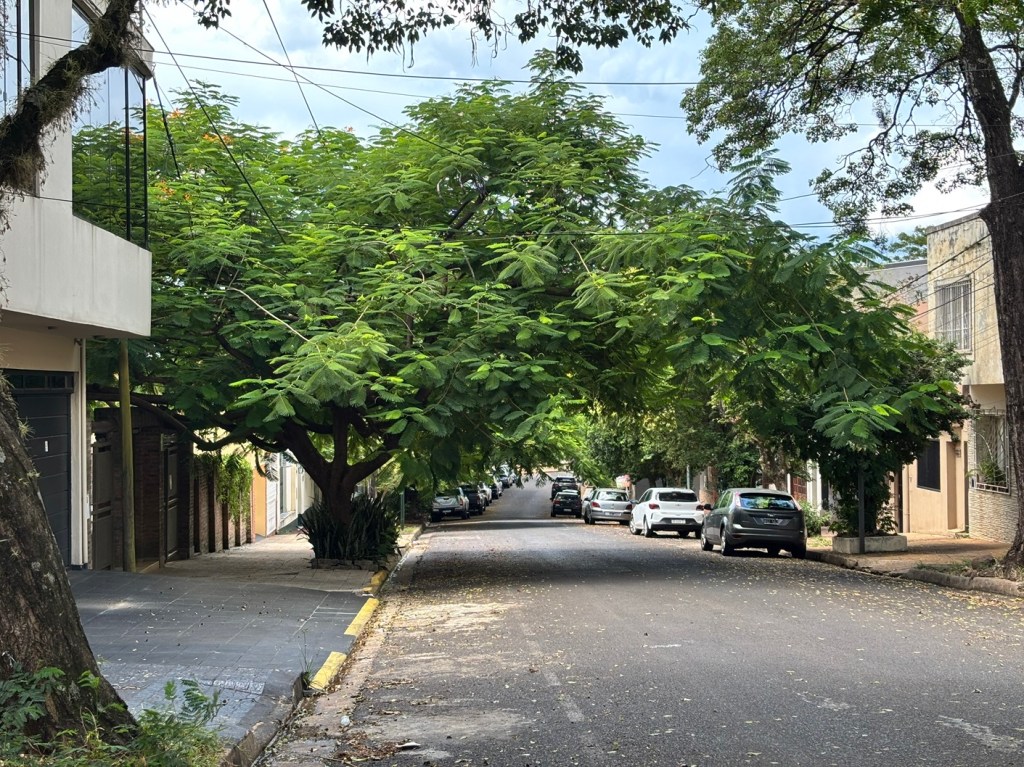
Walking down Bajada Vieja today means walking through layers of history, from the days when riverboats dominated regional transport to the modern Posadas that celebrates its past through art and culture.
 My Misiones - A Foreigner's Guide to Misiones
Leave a comment