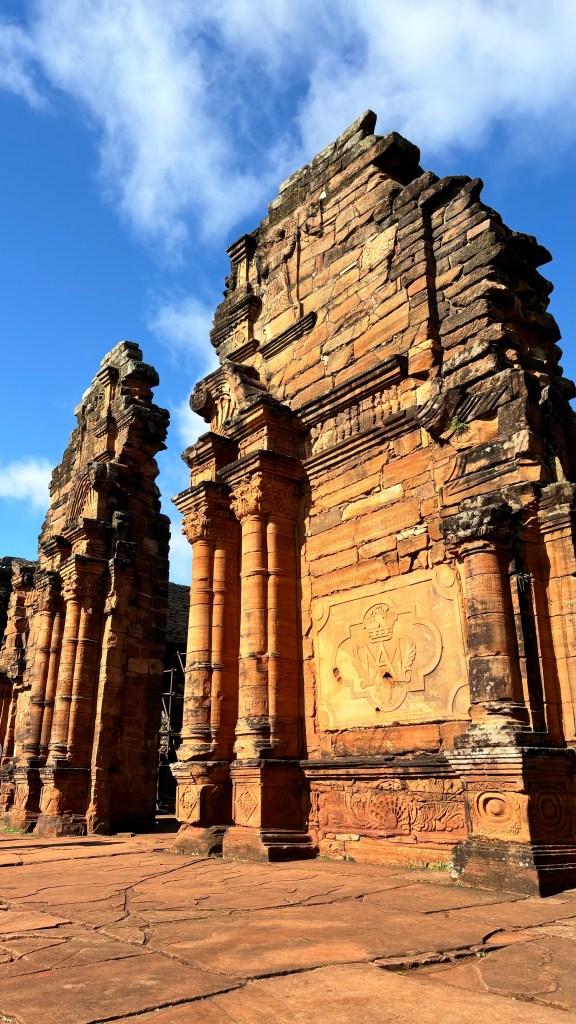
Between the early 17th and mid-18th centuries, the Jesuit Order established a network of mission towns, known as reducciones, across what is now Argentina, Paraguay, and Brazil. In Misiones alone, dozens of these communities were founded, leaving behind architectural ruins, cultural legacies, and also questions about power, faith, and control that still echo today.
A Vision in the Jungle
The Jesuits arrived in the region around 1609, backed by the Spanish Crown, to evangelize the indigenous Guaraní. While they are often praised for shielding the Guaraní from the brutality of slave raids and colonial exploitation, the missions were also tools of cultural transformation and religious control. Life in the reducciones meant adopting Christianity, European-style governance, and new ways of working.
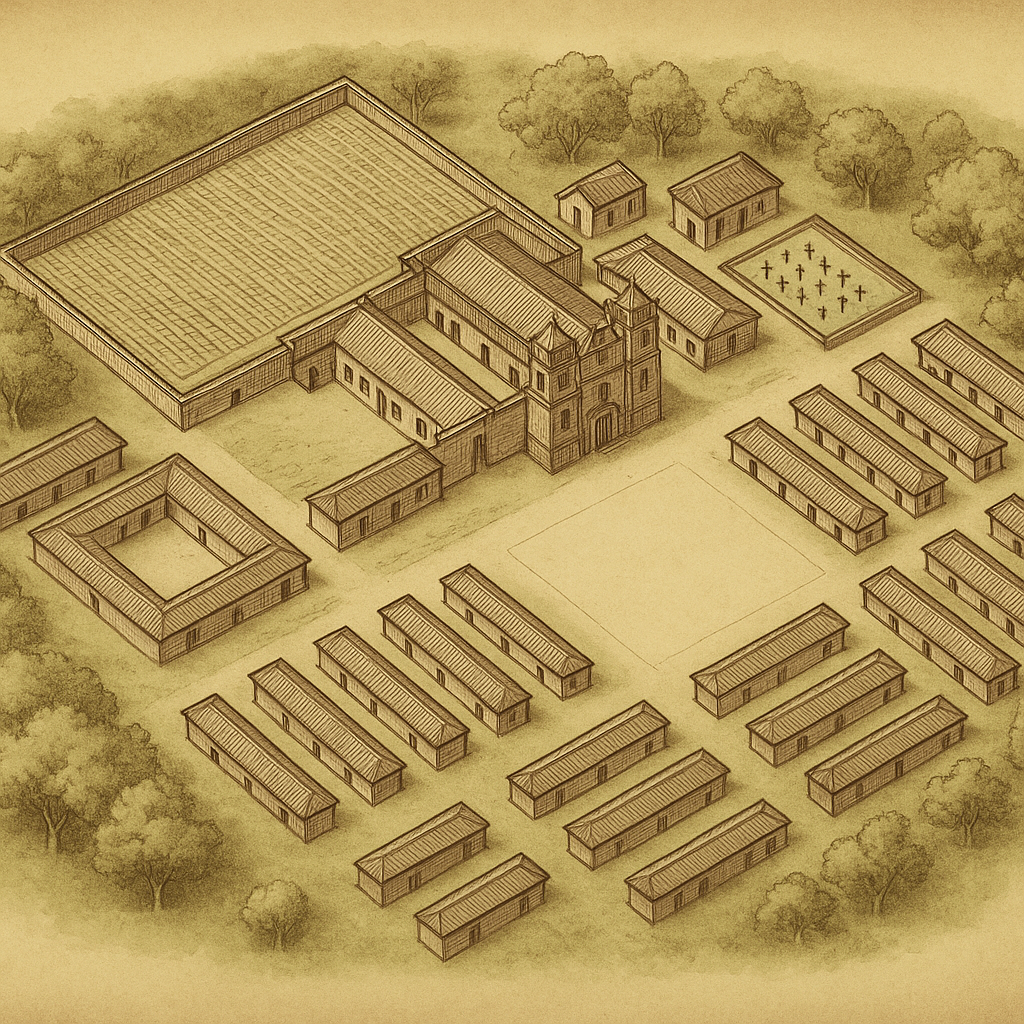
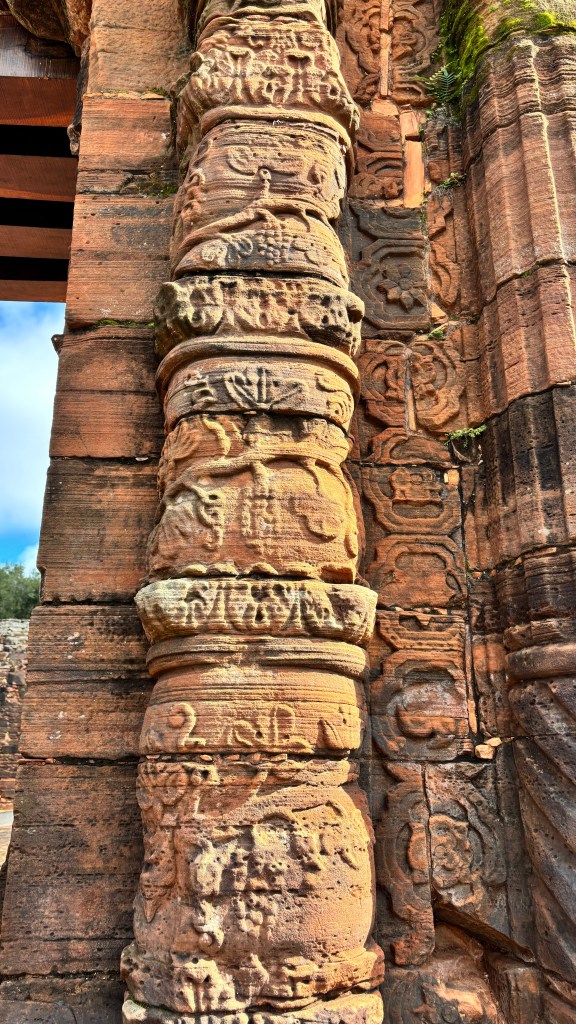
Each mission was organized around a central plaza with a grand church, workshops, schools, and housing. The Guaraní were taught trades such as carpentry, music, and printing, skills that left an impressive artistic legacy. Yet this education came hand in hand with the erosion of traditional spiritual practices and the restructuring of daily life under Jesuit authority.


The Function of the Reductions
The missions were more than religious outposts: they were carefully managed communities of several thousand people, ruled jointly by Jesuit priests and Guaraní leaders under strict supervision. Their stated goals included:
- Spreading Christianity
- Providing education and healthcare
- Teaching agriculture and crafts
- Protecting the Guaraní from slave raiders
But beyond these aims, the reducciones also served the strategic interests of the Spanish Crown, settling indigenous populations in fixed towns, making them more governable, and incorporating them into the colonial economy. What is often remembered as a “fusion of cultures” can also be seen as a negotiation, or a compromise, between survival and assimilation.
Decline and Abandonment
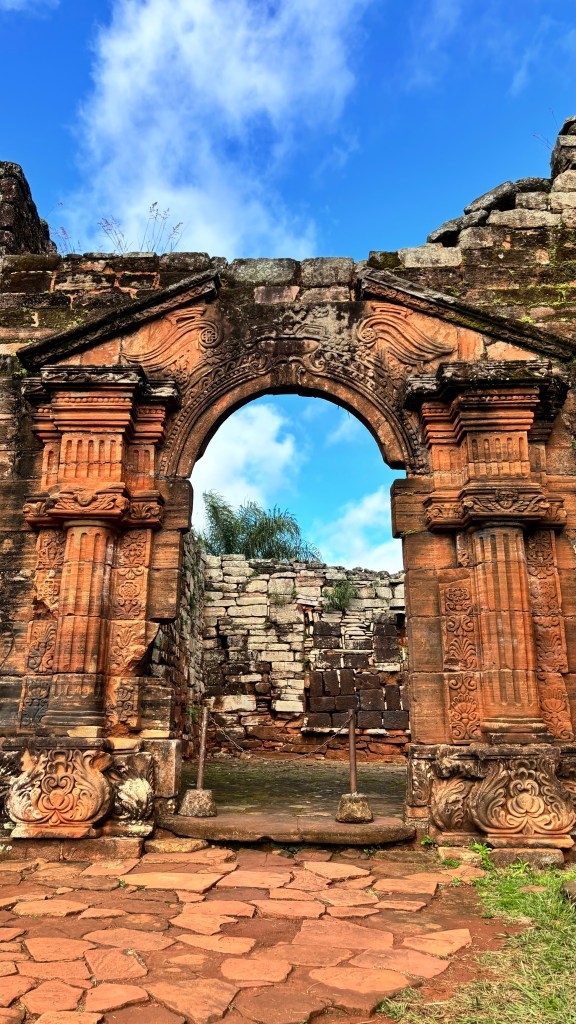
In 1767, the Spanish Crown, alarmed by the Jesuits’ growing influence and relative autonomy, expelled them from all its territories. Without Jesuit leadership, the missions declined rapidly. Many Guaraní dispersed, while others were drawn deeper into the colonial system they had once been sheltered from. Over time, the jungle reclaimed the buildings, leaving behind the ruins we see today, remnants of both protection and loss.
Visiting the Missions in Misiones
Today, the surviving missions are UNESCO World Heritage Sites and major historical landmarks. Walking through them, you can still sense the tension between their dual legacy: havens of learning and art on the one hand and instruments of religious and cultural domination on the other.
Some of the most notable missions you can visit in Misiones include:
- San Ignacio Miní – The best-preserved mission in Argentina, with a museum and night show.
- Santa Ana – Atmospheric ruins in a tranquil forest setting.
- Nuestra Señora de Loreto – Once home to a printing press that published texts in Guaraní.
- Santa María la Mayor – Remote, with partially reconstructed structures.
Each site tells a different story, not only of a remarkable social experiment but also of the deep, complex impact it left on indigenous communities.
 My Misiones - A Foreigner's Guide to Misiones