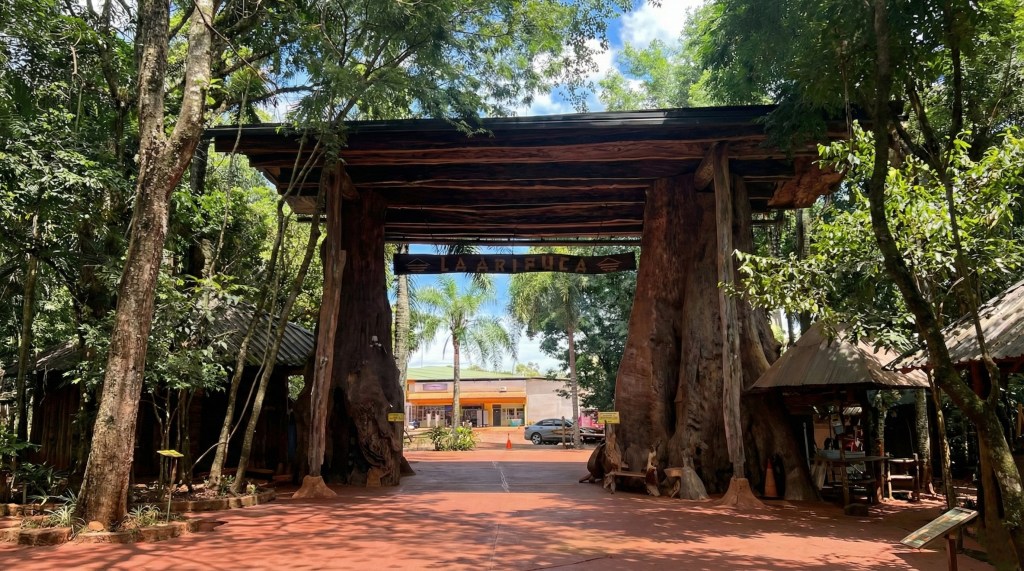
Located just outside Puerto Iguazú, La Aripuca is one of the most meaningful cultural and environmental attractions in northern Misiones. Rather than focusing on spectacle, it offers visitors a reflective experience that connects architecture, ecology, and indigenous heritage.
At first glance, the site is defined by its massive wooden structure, built entirely from rescued native trees. But La Aripuca is more than an eye-catching landmark: it is a carefully designed statement about deforestation, sustainability, and the fragile balance between humans and the subtropical rainforest.
Meaning and Origin of the Name “Aripuca”
The word Aripuca comes from the Guaraní language and refers to a traditional hunting trap used to catch small animals without killing them. The trap is designed to hold, not destroy. This idea is central to the site’s message.
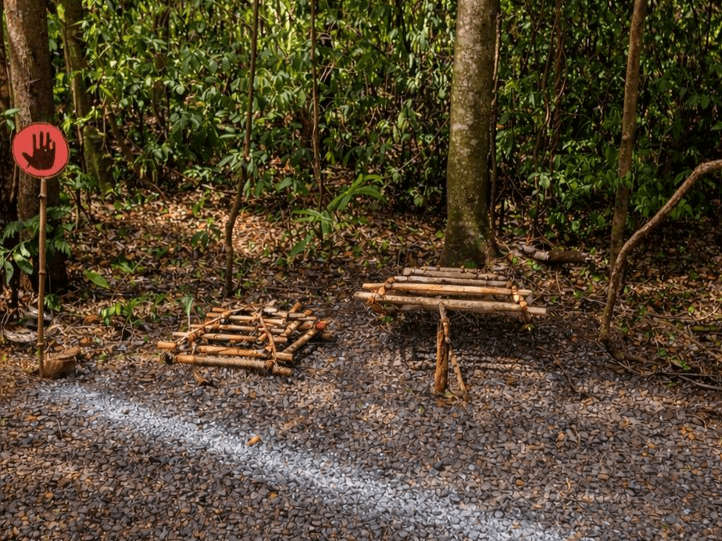
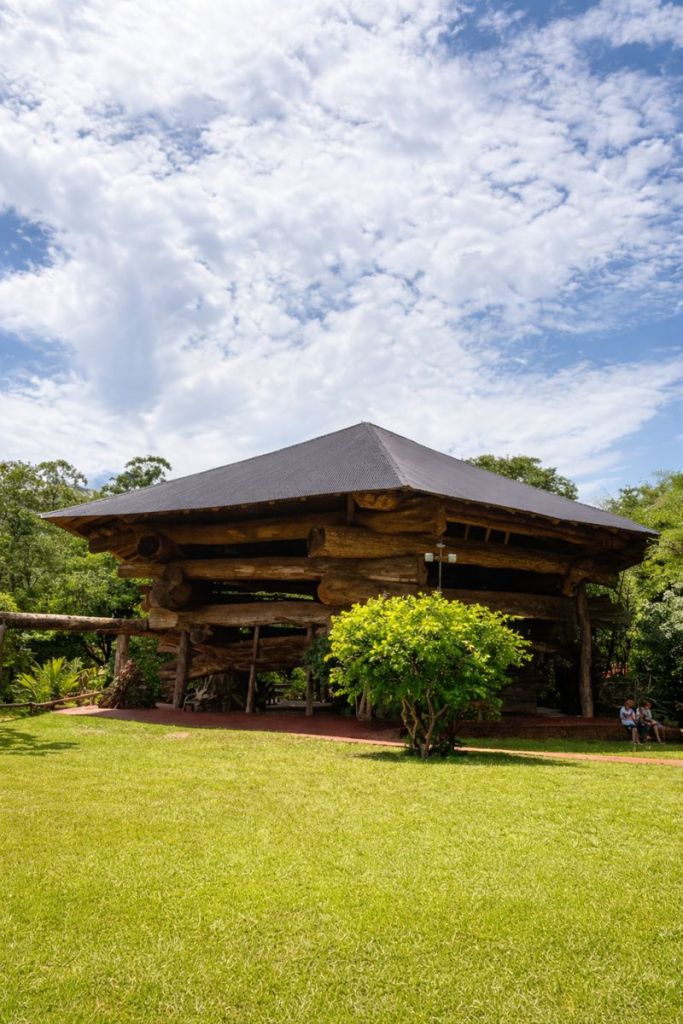
La Aripuca represents the way nature itself becomes “trapped” by uncontrolled logging, agricultural expansion, and urban development. Visitors are invited to physically walk into the structure, turning the abstract concept of environmental damage into a tangible experience.
Architecture Built from Rescued Trees
The heart of La Aripuca is its monumental wooden construction, rising more than 17 meters high. It is made from massive trunks of native hardwood species such as Lapacho, Cedro, and Palo Rosa, all of which were salvaged after falling due to storms, road construction, or deforestation projects.
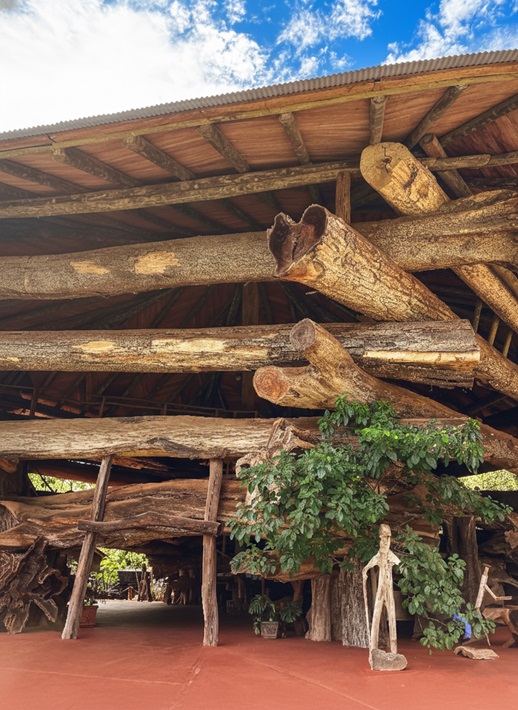
Importantly, no trees were cut down specifically to build La Aripuca. Every piece of wood used had already been lost to human activity or natural causes. In this way, the structure itself becomes a form of recycling on a monumental scale.
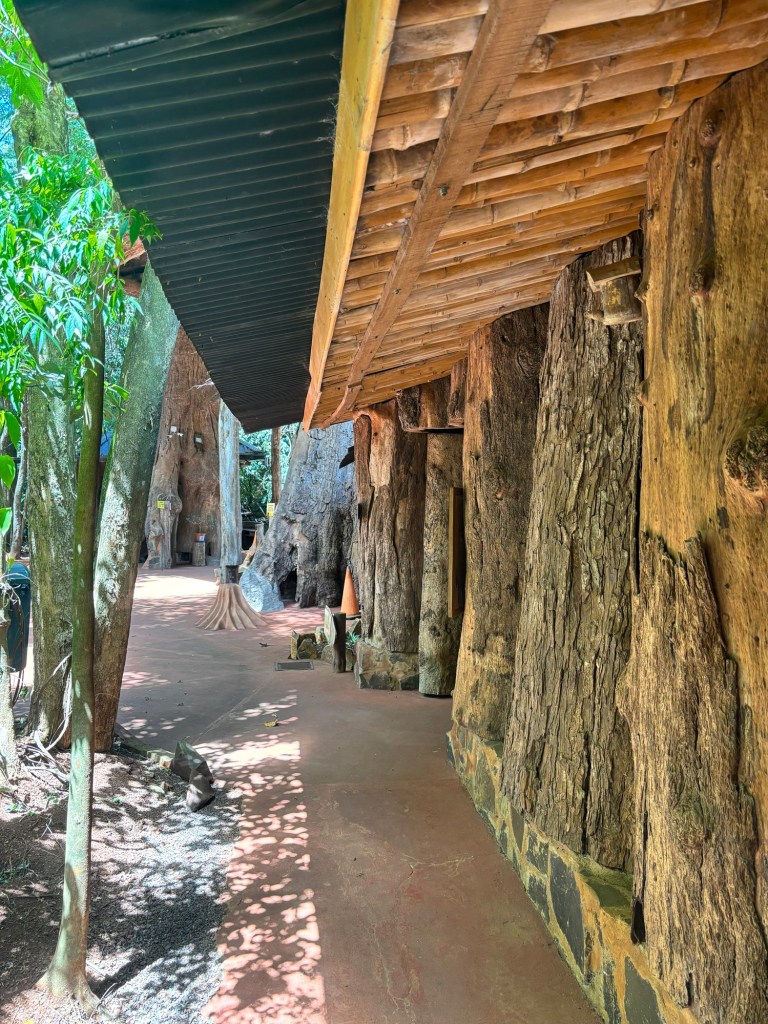
Walking inside the construction, visitors notice how light filters through the gaps between the trunks. The design deliberately avoids closed walls, reinforcing the idea of transparency, respect for nature, and coexistence rather than domination.
Environmental and Cultural Education
La Aripuca functions as a small eco-cultural park. Beyond the main structure, visitors will find:
- Informational displays about the Atlantic Rainforest (Selva Paranaense), one of South America’s most threatened ecosystems
- Explanations of native tree species and their ecological importance
- References to Guaraní culture, particularly their traditional relationship with the forest
- Small exhibition areas focused on conservation and environmental awareness
The educational approach is intentionally accessible. Rather than overwhelming visitors with data, La Aripuca uses visuals, symbols, and short explanations to encourage reflection and curiosity.
Handicrafts and Local Production
An integral part of the site is its artisan market, where local craftspeople sell handmade products made from wood, seeds, natural fibers, and recycled materials. This supports the regional economy and reinforces the idea that sustainable tourism can provide livelihoods without destroying natural resources.
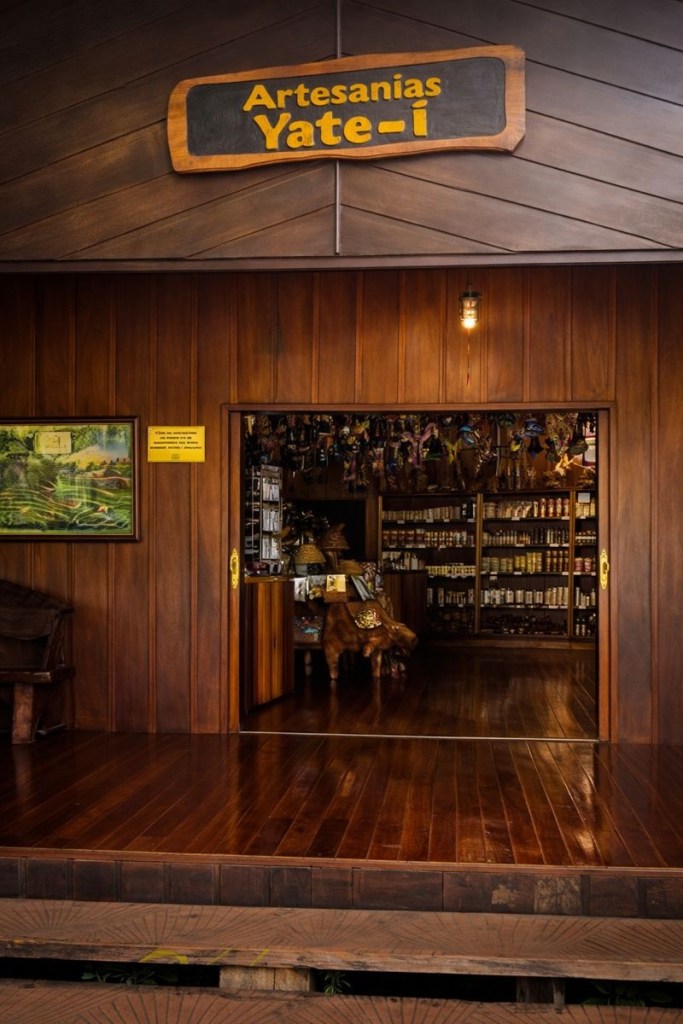
There is also a small café area, making La Aripuca a pleasant and calm stop during a day of sightseeing around Puerto Iguazú.
Who Should Visit La Aripuca?
La Aripuca is especially suitable for:
- Travelers looking for meaningful experiences beyond Iguazú Falls
- Families with children, thanks to the short and easy walking paths
- Visitors interested in sustainability, ecology, and regional culture
- Those seeking a quieter, reflective stop between major attractions
A typical visit takes 30 to 60 minutes, making it easy to combine with other nearby sites.
Location and Practical Information
La Aripuca is located along Ruta Nacional 12, on the way from Puerto Iguazú to the Iguazú National Park. It is easily accessible by car, taxi, or organized tour.
- Open year-round
- Short, mostly flat paths
- Suitable for all ages and fitness levels
Why La Aripuca Matters in Misiones
Misiones is defined by its biodiversity, red soil, and rainforest landscapes. La Aripuca translates these large themes into a concrete, physical narrative. It shows how tourism can educate, inspire, and protect at the same time.
For visitors, La Aripuca offers a deeper understanding of the environmental challenges facing the region—and a reminder that conservation begins with awareness.
For MyMisiones, it represents exactly the kind of place where nature, culture, and responsible tourism intersect.
Sources & Further Reading
- Official site of La Aripuca, Puerto Iguazú (https://www.aripuca.com.ar/)
- Iguazú Turismo – La Aripuca: horarios, cómo llegar, precio de entrada (https://www.iguazuturismo.com.ar/aripuca.html)
 My Misiones - A Foreigner's Guide to Misiones
Leave a comment