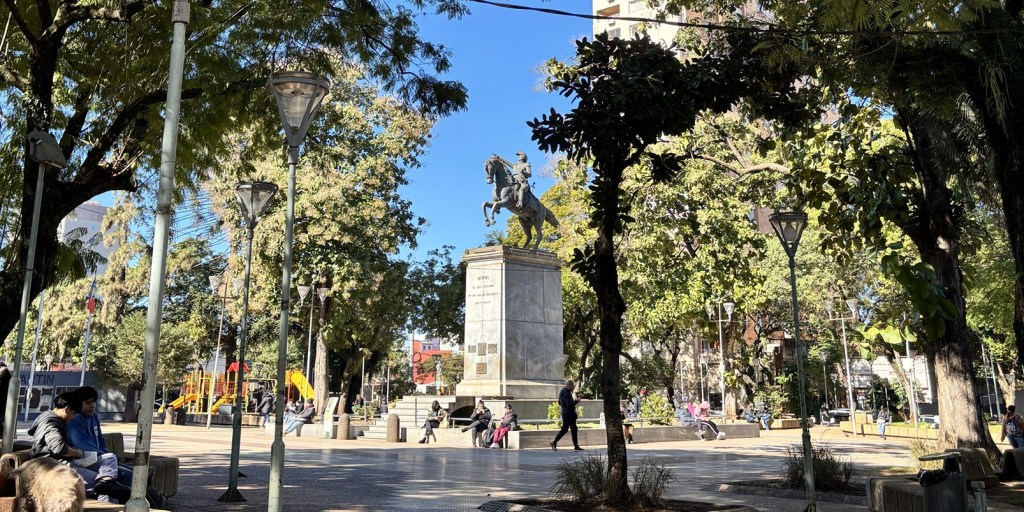
Just a few blocks from Plaza 9 de Julio lies Plaza San Martín, the other surviving square from Posadas’ original city plan. Dedicated to the memory of General José de San Martín, the “Liberator of Argentina.”, you’ll find Plaza San Martín is more than just another square. It’s a place where history, memory, and daily life come together.
Surrounded by the busy streets of Ayacucho, La Rioja, Junín, and Entre Ríos, this green space is a favorite meeting point for locals, a stage for civic life, and a peaceful retreat for visitors who want to connect with the spirit of the city.
From “Plaza del Piso” to Civic Landmark
The origins of Plaza San Martín date back to 1871, when the government of Corrientes, then responsible for this part of Argentina, set aside four city blocks for public squares in the growing settlement of Posadas. At the time, this area was known as Plaza del Piso.
The name not only describes its practical use as an open unloading ground for carts arriving from the countryside. It also referred to the “Derecho de Piso,” a local fee that merchants had to pay to sell their goods there. In this way, the plaza functioned as both a commercial space and an early form of municipal regulation.
On August 10, 1883, the City Council officially renamed the square Plaza San Martín, transforming it from a place of trade into a civic space dedicated to the memory of one of Argentina’s most important historical figures.
The Monument and the Making of Memory
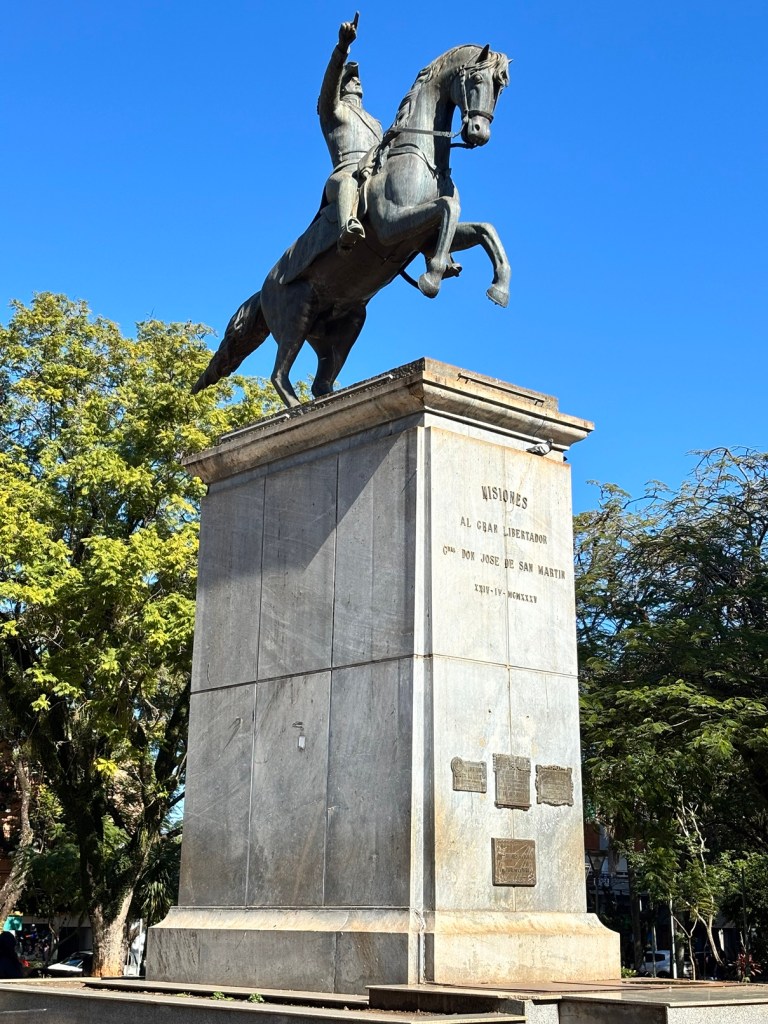
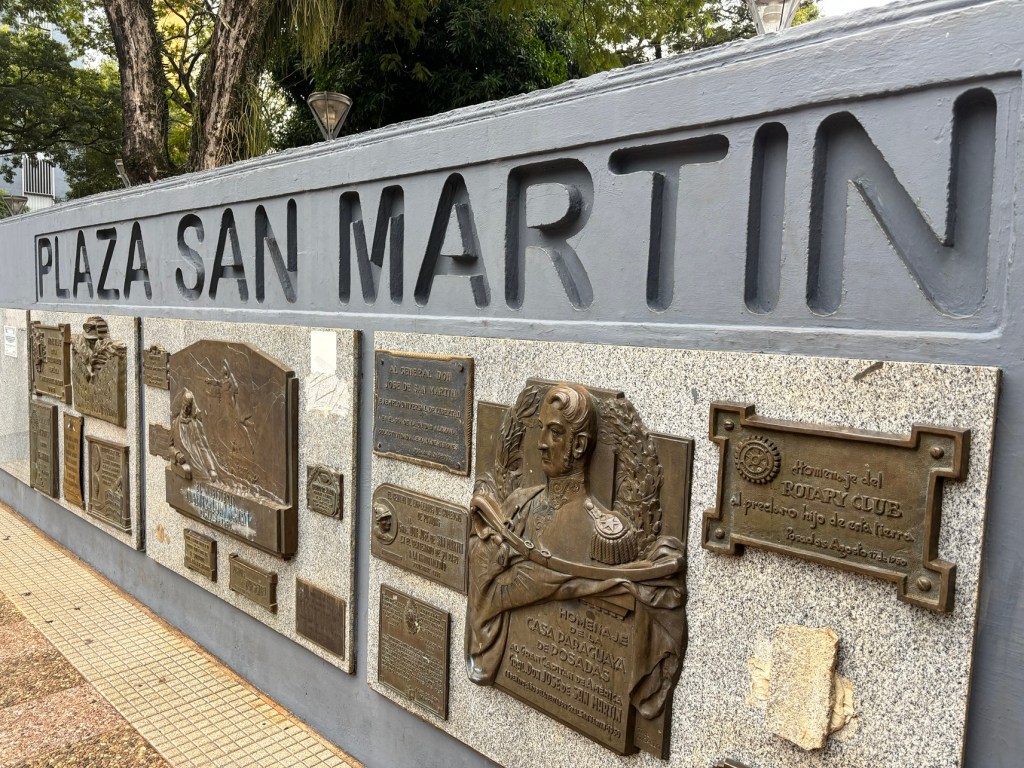
Before the current monument was installed, Plaza San Martín already served as a site of commemoration. In 1905, a bust of General San Martín was placed in the square, reflecting an early effort to anchor national memory in the urban landscape.
The plaza took on its present symbolic form with the unveiling of the equestrian monument on April 24, 1935. The statue is a reproduction of a work by the French sculptor Louis-Joseph Daumas, whose representation of San Martín on horseback became one of the most influential visual models of the Liberator across Argentina.
From that moment on, Plaza San Martín was firmly established as a space of national remembrance, closely tied to ideas of independence, leadership, and civic identity.
A Living Green Museum
One of the defining features of Plaza San Martín is its vegetation. The square brings together native tree species from Misiones and plants introduced later, reflecting both the natural environment and the province’s economic history.
Among the native species are lapacho, famous for its spectacular pink and yellow blossoms, jacaranda with its purple flowers, and palo borracho, easily recognizable by its swollen trunk. These trees are deeply rooted in the region’s landscape and cultural traditions.
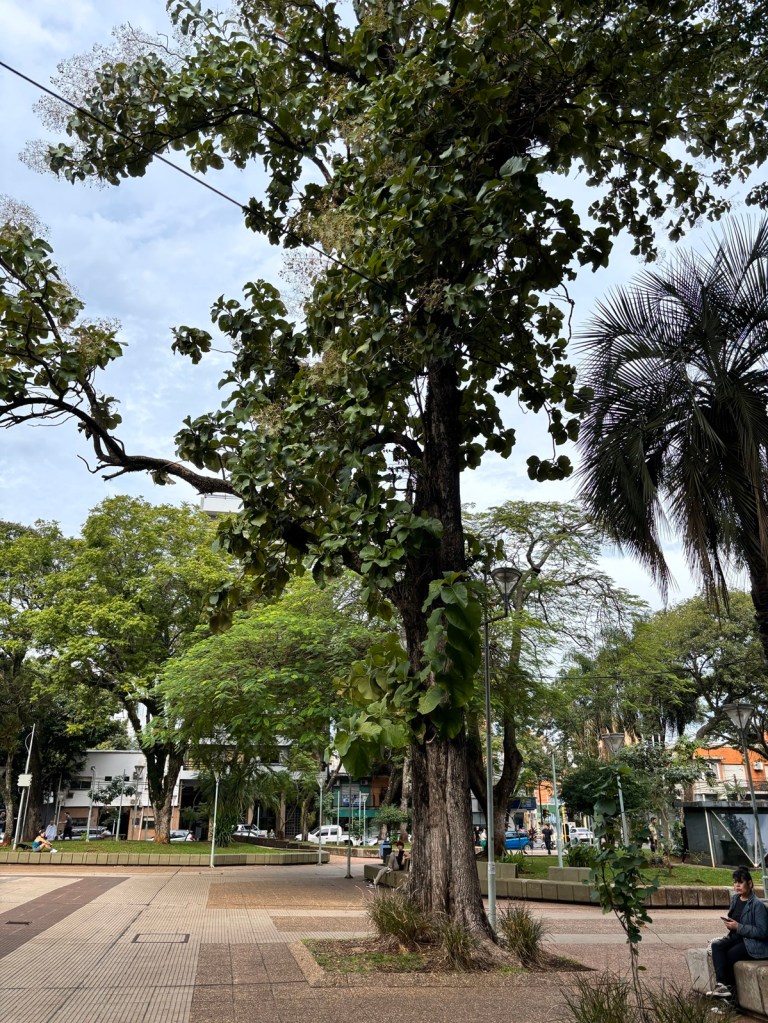
Alongside them stand pine and eucalyptus trees, non-native species closely linked to Misiones’ forestry and paper industries. Their presence highlights how the province’s environment has been shaped by economic development and global connections.
Walking through the plaza today feels like moving through a small open-air museum, where nature and history quietly coexist.
Surrounded by Institutions and Memory
What makes Plaza San Martín particularly fascinating is not only what’s inside, but also what surrounds it. Each side of the square is bordered by institutions that tell a story about the city and province:
- The Escuela Nº1 Félix de Azara, founded in 1887, was Posadas’ very first school and remains a symbol of public education in Misiones.
- The Instituto Superior Antonio Ruiz de Montoya, created in 1960, is one of the province’s most prestigious teacher training institutes, carrying on a tradition of education and culture.
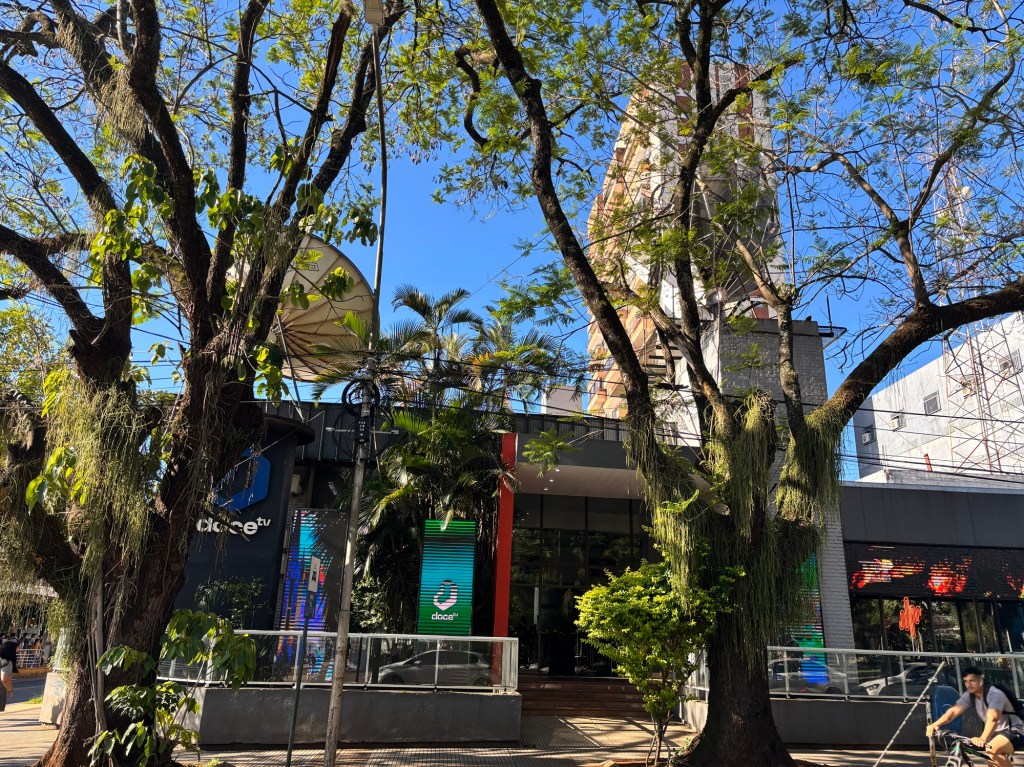
- Canal 12, Misiones’ public television station, plays a vital role in communication and identity across the region.
Directly across from the plaza once stood the Cárcel de Encausados, a prison that dominated the area for decades and was later used as a detention center during Argentina’s last military dictatorship. The building was demolished in the early 1980s, shortly before the return of democracy. Today, the site functions as a Memorial Space, ensuring that this difficult chapter of history remains visible and remembered.
Taken together, these institutions turn the plaza into a crossroads of memory, education, culture, and civic life.

A Square Full of Life
Despite its historical weight, Plaza San Martín is not a static monument to the past. It remains a vibrant part of everyday life in Posadas.
Throughout the year, the plaza hosts national commemorations, especially on August 17, the anniversary of San Martín’s death. It is also closely connected to the city’s cultural calendar, serving as a meeting point during the Estudiantina, Posadas’ iconic student festival, as well as for book fairs, artisan markets, concerts, and public demonstrations.
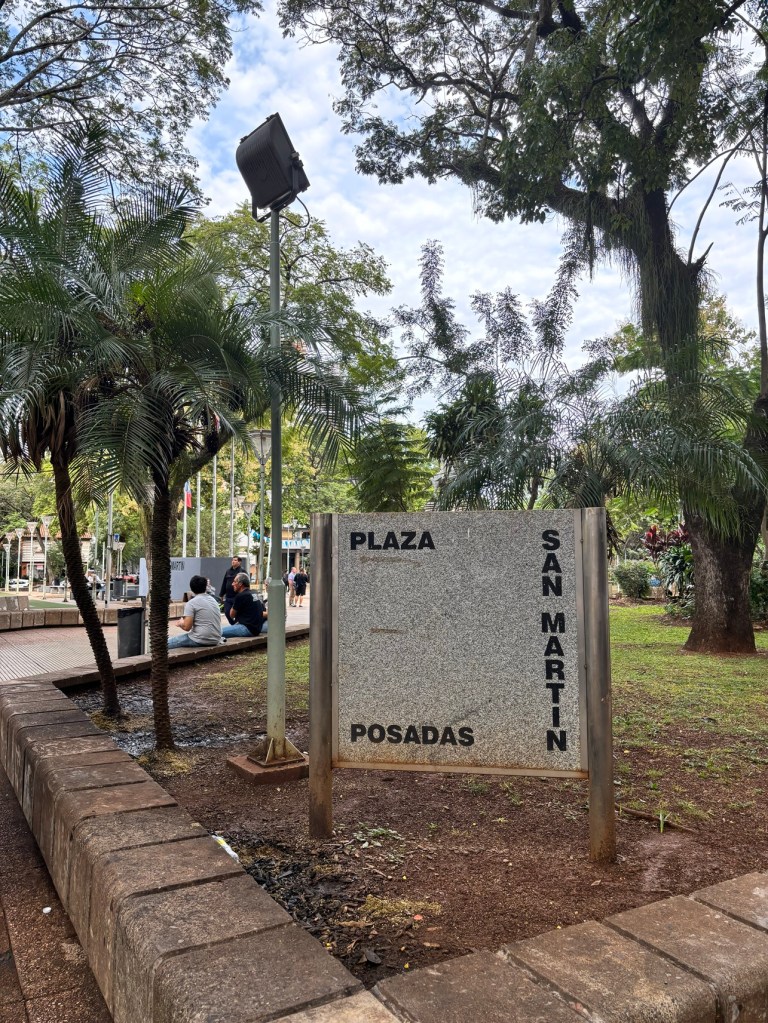
For locals, it is a familiar place to meet friends, rest under the trees, or simply observe the rhythm of the city. For visitors, it offers an authentic glimpse into how public space is lived and shared in Posadas.
Traveler’s Tips
- Best time to visit: Sunset, when the monument glows in golden light and the surrounding cafés, shops, and cultural venues come alive.
- Look closely: The trees in bloom (especially the lapacho in early spring) are unforgettable, and depending on the season, the plaza offers a changing natural palette.
- Combine visits: From here, you can easily walk to Plaza 9 de Julio, the city’s main square, and continue exploring the historic heart of Posadas.
Why You Shouldn’t Miss It
Plaza San Martín is more than a park. It’s a place where history, memory, and daily life intersect. Visiting it means experiencing the city as locals do: not rushing from one attraction to another, but slowing down, observing, and feeling how Posadas breathes.
 My Misiones - A Foreigner's Guide to Misiones
Leave a comment