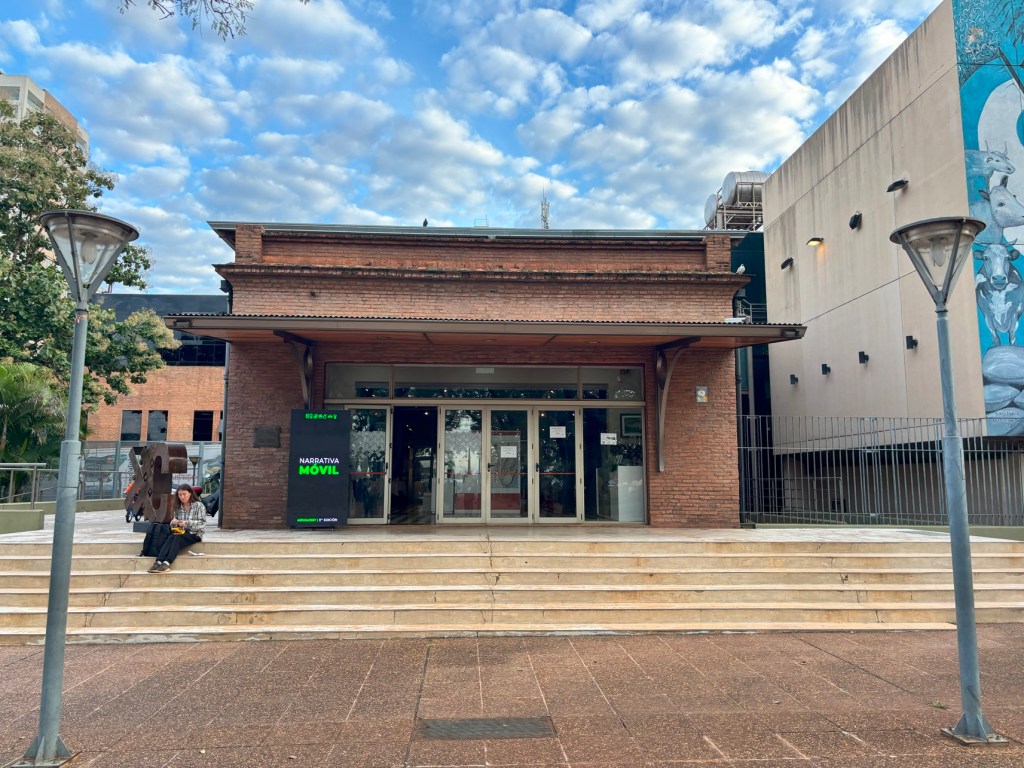
Overlooking the Parque República del Paraguay, facing the Paraná River, the Museo Regional Aníbal Cambas stands as one of the most emblematic cultural spaces in Posadas. More than a museum, it is a guardian of the collective memory of Misiones — preserving stories of the land, its people, and the deep connections between nature and culture that define the province.
Origins and Founding
The museum was founded in 1940 under the initiative of the Junta de Estudios Históricos de Misiones, an organization dedicated to the research and preservation of regional history. Its first president, Aníbal Cambas (1905–1983), was a notary, historian, and passionate advocate for Misiones’ institutional identity. As a founding member of the Junta, he helped establish both the museum and the province’s historical archives.
Cambas played a crucial role in representing Misiones at the First Congress of National Territories and later before Argentina’s National Congress, where he defended the restoration of Misiones as a province. His work laid the intellectual foundation for understanding the region’s rights and identity.
The Building and Its Setting
The museum’s home has a history of its own. The red-brick structure once belonged to the Third Regiment of the Line, stationed in Posadas after the War of the Triple Alliance (1864–1870). Built toward the end of the 19th century, it is an example of rustic brick architecture typical of its period.
According to architect Liliana Oleksow, the building’s architectural value equals that of its contents. Both the structure and its collections represent a shared heritage: the tangible and the intellectual fabric of Misiones.
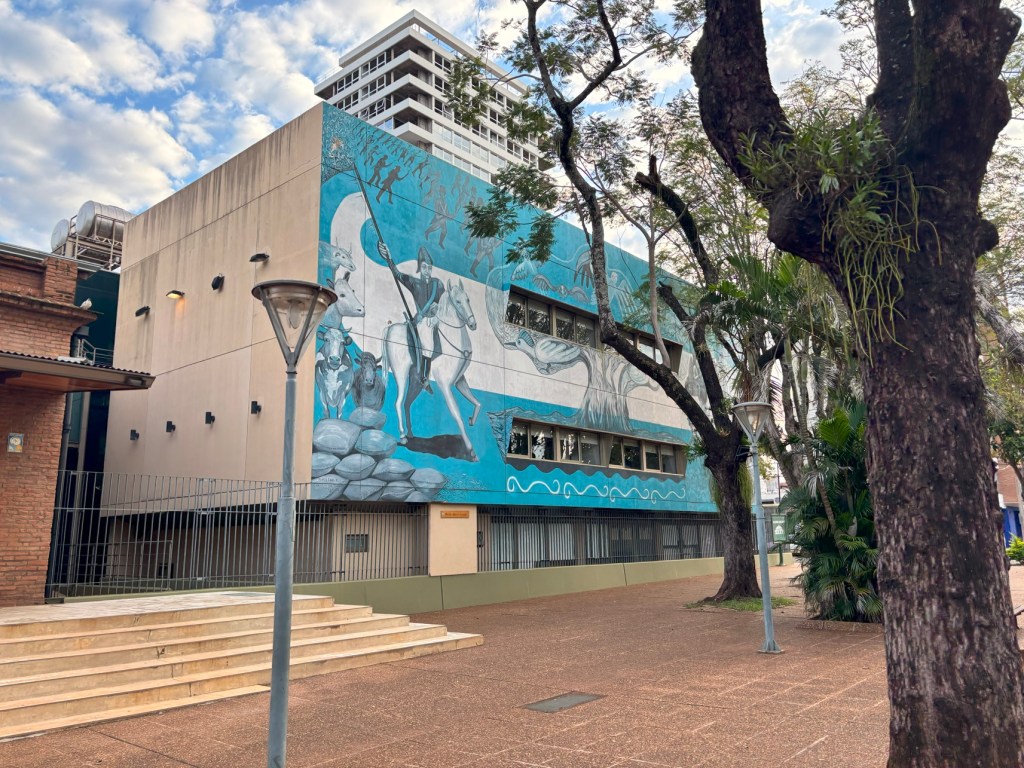
The museum is located within Parque Paraguayo, a historical area known as Barrio de los Cuarteles. The park itself was designed in the 1930s by architect Carlos Bustillo and has long served as a social and cultural gathering point for the city. Nearby stand other landmarks such as the Anfiteatro Manuel Antonio Ramírez and the provincial legislature, forming a civic ensemble along the riverfront.
Thematic Halls and Collections
The museum’s permanent exhibition is divided into several thematic halls that trace the evolution of Misiones from its earliest geological formations to the modern era. Each room highlights a different aspect of the province’s natural and cultural identity.
The First Cultures
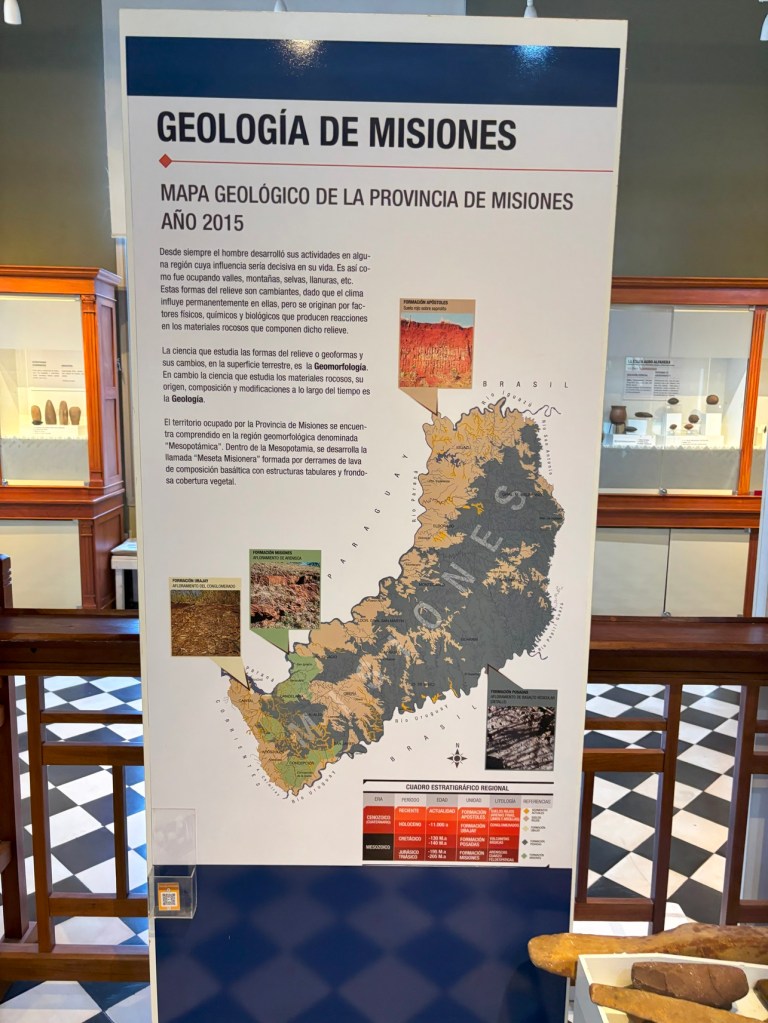
This section explores the prehistoric and geological origins of Misiones, from basaltic lava flows and red sandstone to the first human settlements in the Guaranitic region. Visitors learn how geography shaped the lifestyles of these early communities.
Guaraní Culture
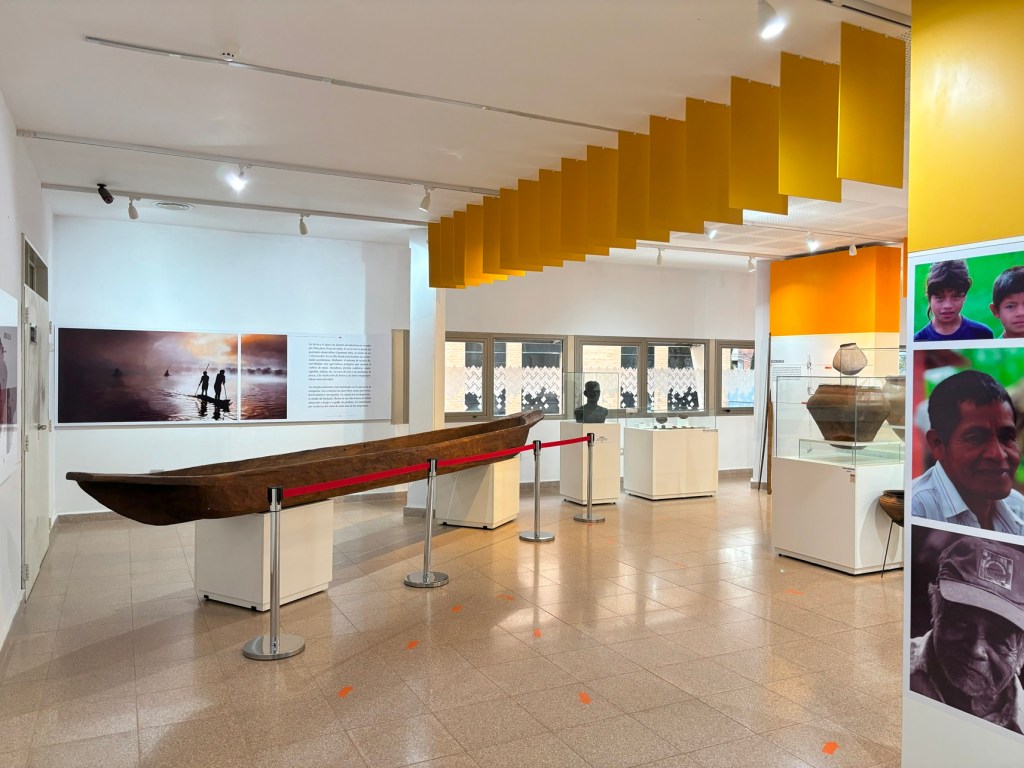
One of the museum’s central rooms is devoted to the Guaraní, whose influence still resonates throughout Misiones today. Through artifacts, models of communal houses, tools, and wooden carvings, visitors can understand the social organization of the teko’a (village), the importance of kinship, and the spiritual world centered on the Opyguá (spiritual leader). The section also delves into the Jesuit missions founded between 1609 and 1767, highlighting their architectural, artistic, and linguistic legacy.
Aché–Guayakí
The Aché–Guayakí were nomadic hunter-gatherers who lived in the forests of Misiones and Paraguay.
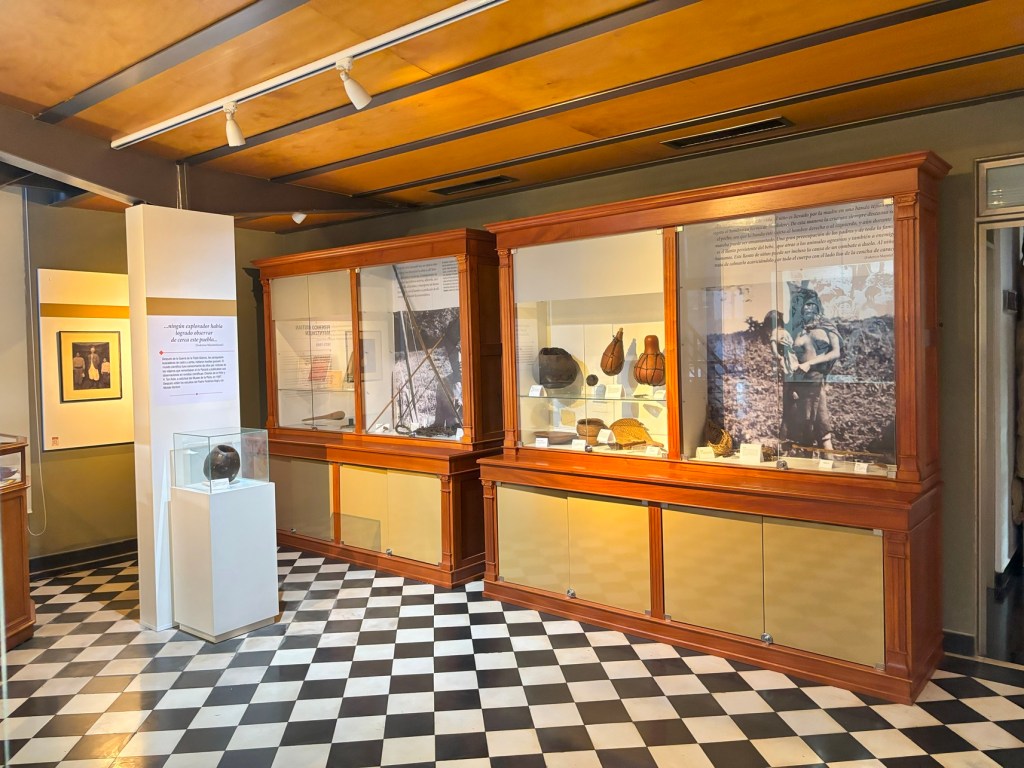
This hall preserves pieces collected by Federico Mayntzhusen, a German settler who documented and donated a large number of cultural artifacts to the museum in the 1930s and 1940s. The exhibition offers a rare glimpse into their daily life, subsistence practices, and musical traditions.
Misiones Through Independence and Nationhood
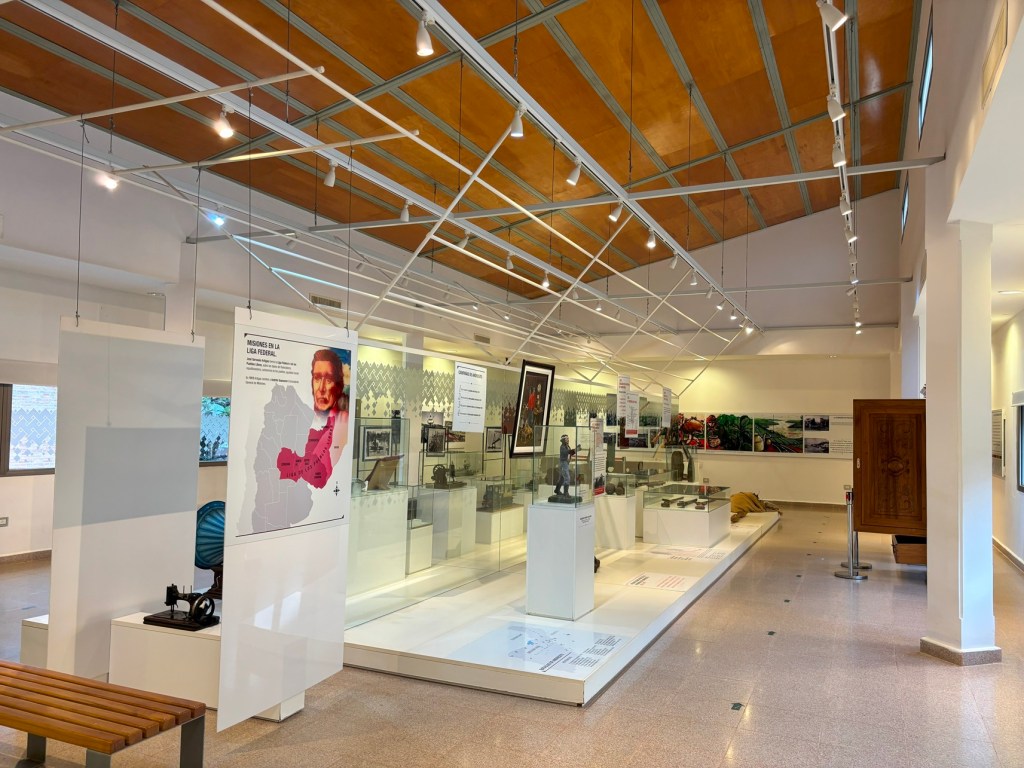
From the expulsion of the Jesuits to the 19th century, Misiones underwent profound transformations: depopulation, colonization, and political reorganization.
The hall highlights the Revolution of 1810, the Reglamento Provisional issued by Manuel Belgrano, and the rise of Andrés “Andresito” Guacurarí y Artigas, the Guaraní commander who governed Misiones between 1815 and 1819. His leadership symbolized equality and the right of self-determination, making him a unique figure in Argentine history.
Contemporary Misiones
The later sections portray the region’s transition from a national territory to a province in 1953. Exhibits document the arrival of European immigrants: Poles, Ukrainians, Germans, and others, who contributed to the agricultural development of Misiones. Tools, photographs, and household objects illustrate the transformation of the local economy through yerba mate, timber, and cooperative movements.
A New Chapter: From Provincialization to the Present
The museum is currently expanding with the construction of a new exhibition room dedicated to the process of provincialization and the period that followed. This upcoming space will explore how Misiones evolved from a national territory into a fully recognized province, focusing on the social, political, and cultural developments that shaped its contemporary identity. Once completed, the new hall will extend the museum’s historical narrative into the modern era, connecting the legacy of the past with the dynamic present of Misiones.
The Museum Library and Cultural Network
Attached to the museum is the Clotilde González de Fernández Library, founded in 1941. Named after one of Misiones’ pioneering educators and historians, the library preserves rare regional publications, historic newspapers, and personal collections of early researchers. It remains an invaluable resource for students and historians studying the province’s past.
The museum also maintains close ties to the broader cultural network of Misiones, including exhibits dedicated to Horacio Quiroga, the Uruguayan writer who lived and worked in San Ignacio, and Andresito, whose legacy of resistance and unity continues to inspire the people of the province.
Visiting Today
Today, the Museo Regional Aníbal Cambas serves as both a museum and a research center. It hosts educational activities, workshops, and temporary exhibitions aimed at fostering awareness of Misiones’ rich cultural diversity. The entrance is free, and its location within the tranquil Parque Paraguayo makes it a perfect destination for locals and visitors alike.
A visit here is more than a walk through history, it is an encounter with the roots of Misiones itself.
Visitor Information
📍 Address
Museo Regional Aníbal Cambas
Parque República del Paraguay
Alberdi 600, Posadas, Misiones, Argentina
🕒 Opening Hours
Monday – Friday: 07:00–12:00 / 14:00–19:00
Saturday & Sunday: Closed
🎟 Admission
Free entry
🔗 Official Facebook Page
facebook.com/museoacambas
Sources:
Junta de Estudios Históricos de Misiones (Museo Regional Aníbal Cambas archives)
Liliana Oleksow, Acerca del Edificio del Museo Aníbal Cambas
Folleto del Museo Regional Aníbal Cambas
Sala de las Primeras Culturas, Cultura Guaraní, Aché-Guayakí, Misiones Contemporánea
Biographies of Aníbal Cambas, Andrés Guacurarí, Horacio Quiroga, Clotilde González de Fernández
Parque Paraguayo historical documentation
 My Misiones - A Foreigner's Guide to Misiones
Leave a comment