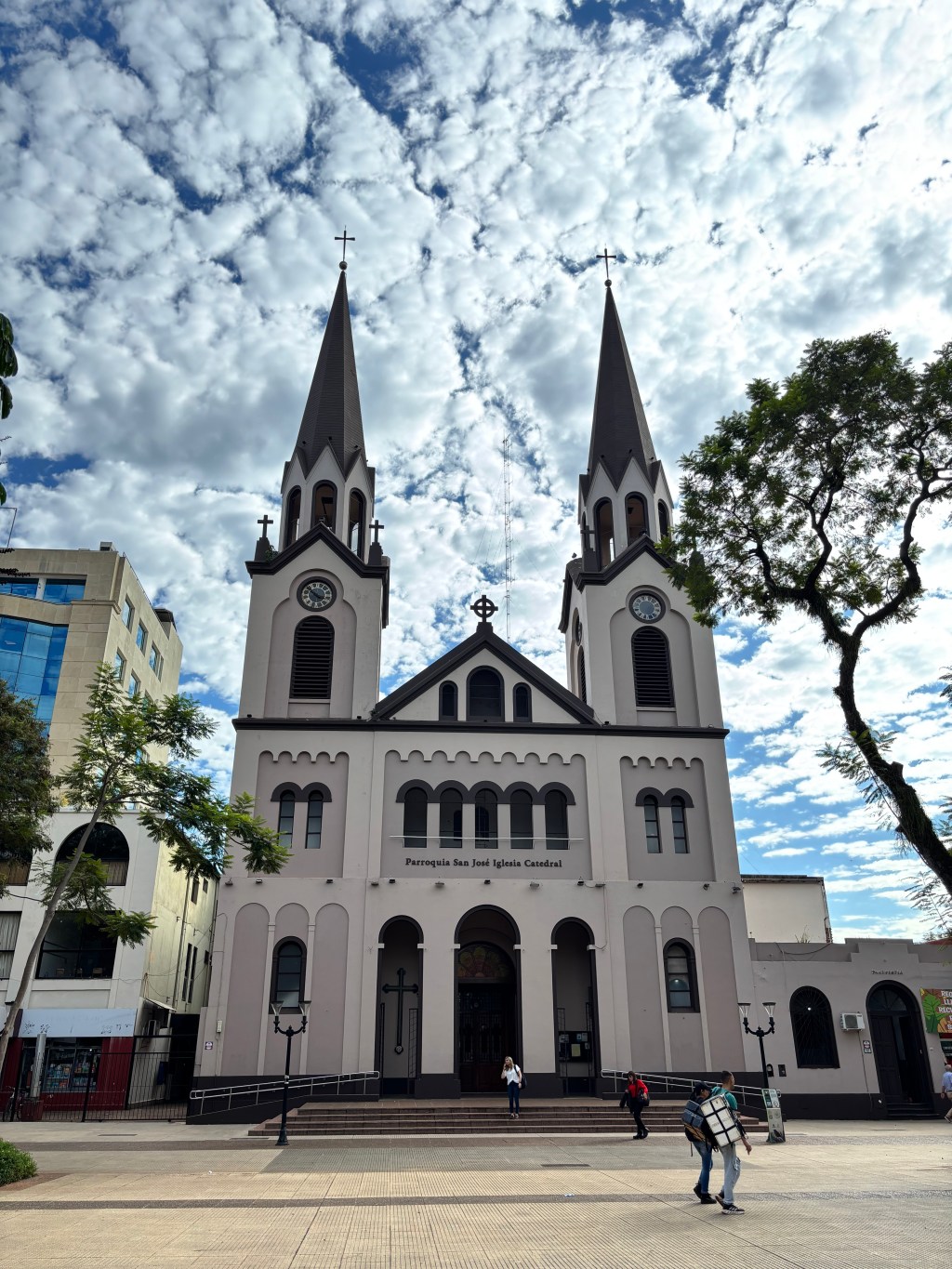
On the northern side of Plaza 9 de Julio rises the Catedral de San José, one of the most emblematic landmarks of Posadas. With its neoclassical façade, twin towers, and rich history, it is not only a place of worship but also a cultural symbol of Misiones.
Origins and Early Construction
The cathedral’s story began in 1876, when the cornerstone was laid on January 16. The first temple was a modest single-nave building with a dirt floor, more like a warehouse than a church. In 1879, the first bell was installed and blessed.
At the turn of the century, the growing community called for a new, larger temple. Thanks to donations, fundraising events, and national subsidies, the resources were gathered to begin the cathedral we see today.
In 1902, the cornerstone of the new building was blessed, based on a design by Father Juan Becker, who was also an engineer. By 1909, the new church was inaugurated, featuring a public clock in the tower and richly decorated altars.
Growth and Completion
Further construction continued into the 1920s, adding a second tower, front steps, and new flooring. In 1938, under architect Von Liebe and builder Emilio Fogeler, the cathedral reached completion. During the 1940s, both towers were raised to their current harmonious proportions.
With the creation of the Diocese of Posadas in 1957, the church was elevated to the rank of cathedral, cementing its role as the spiritual center of the province.
The Historic Pipe Organ
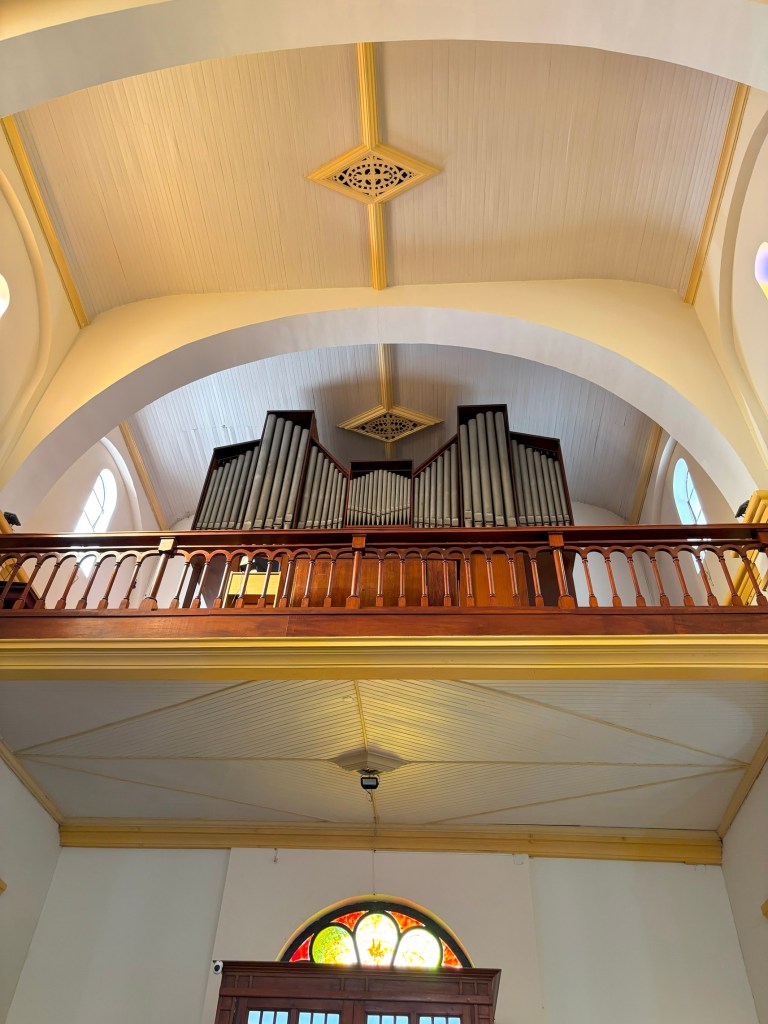
Among the cathedral’s treasures is its Edward Sebald pipe organ, purchased in Germany in 1962 through an initiative of Bishop Jorge Kemerer and financed by local donations. With 840 pipes, it is the only one of its kind in Misiones.
However, Misiones’ subtropical climate poses a constant challenge. Built for environments with temperatures under 30°C, the organ often faces heat waves of 40–45°C. Its pipes, made of a tin-lead alloy, can warp under such heat, altering the sound. To preserve its voice, the organ requires maintenance at least twice a year.
During the 2006–2007 restoration, the instrument was fully dismantled and repaired. An innovative MIDI system was also added, allowing the organ to play digitally when no organist is available.
Restorations and Modern Additions
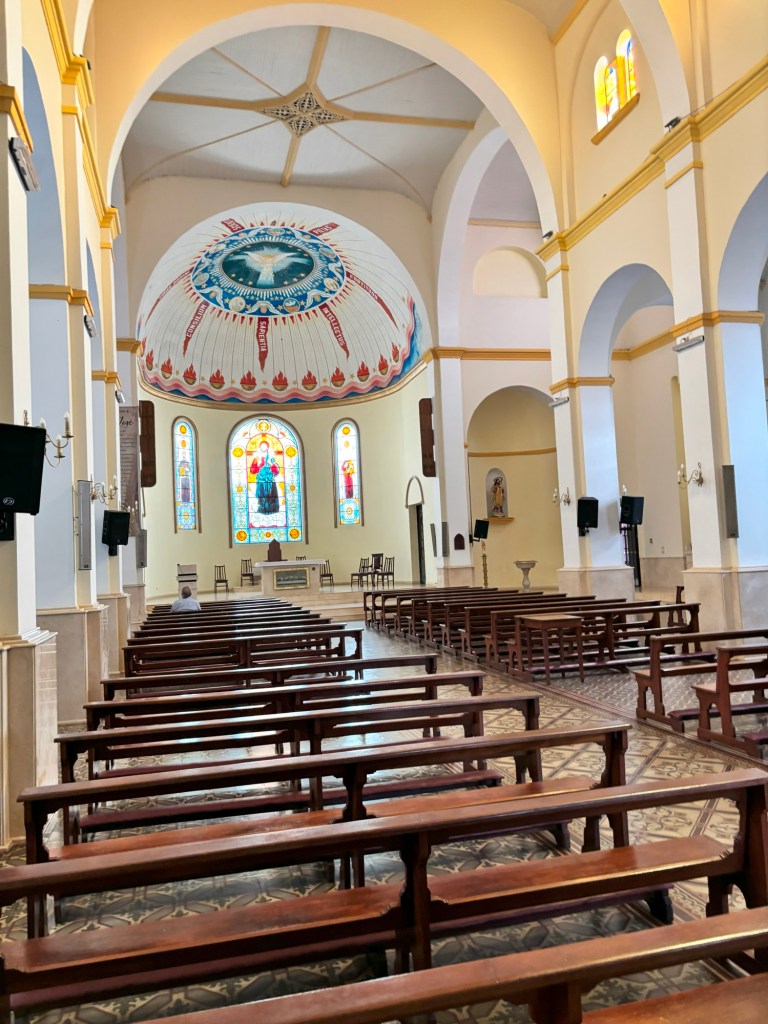
The cathedral has been carefully restored several times, most notably starting in 2006 to celebrate the Diocesan Jubilee Year. Works included repairing the roof, repainting the interior and exterior, restoring windows, upgrading sound and lighting, and reopening the sacristy.
A highlight of this restoration was the return of the Spiritus Sanctus mural in the apse, painted by local artist Sergio Ortiz.
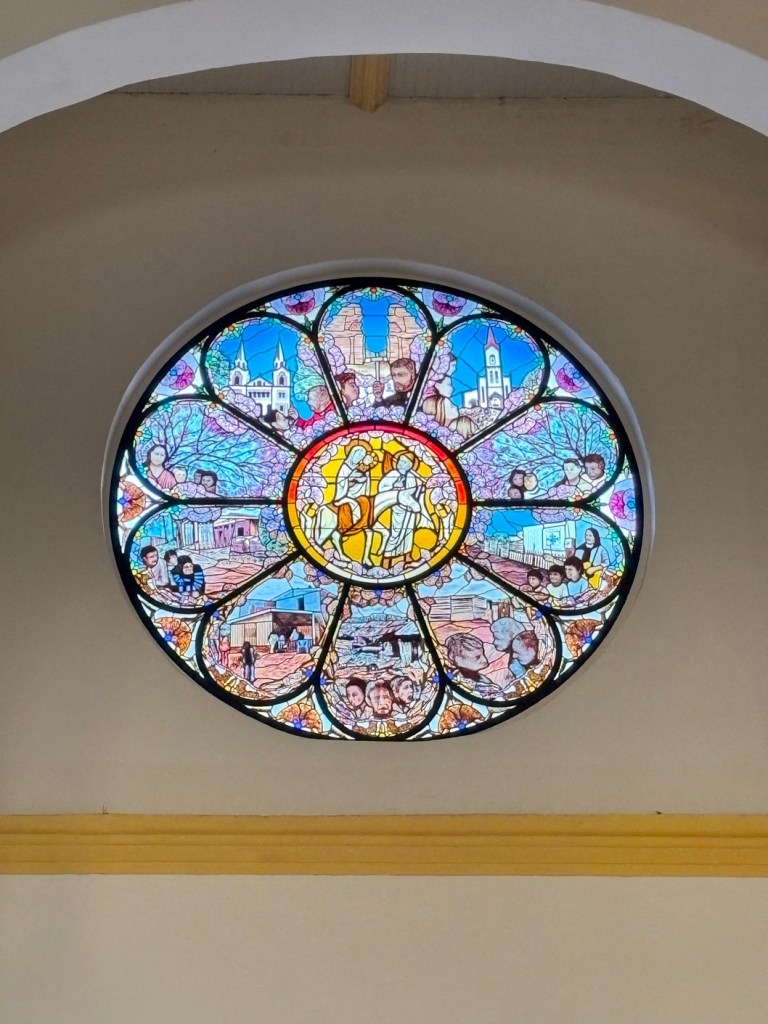
In 2019, two new stained-glass windows were added: The Holy Family in their flight to Egypt and Saint Joseph the Worker with Jesus, both connecting biblical themes with the realities of migration and labor in Misiones.
Inside, visitors will also find a Chapel of the Blessed Sacrament for perpetual adoration and another dedicated to Our Lady of Loreto, linking the cathedral to Misiones’ Jesuit-Guaraní heritage.
More than a Religious Site
Beyond its religious significance, the Catedral San José is a gathering place for the people of Posadas. From weddings and community celebrations to national holidays and moments of remembrance, it plays a central role in the life of the city.
Whether you come for faith, history, or architecture, the Catedral San José offers a deep insight into the spirit of Posadas and Misiones.
📍 Visitor Info
- Location: Calle San Martín 1850, north side of Plaza 9 de Julio, city center
- Entry: Free
- Best time to visit: Morning for interior light, evening when the façade is illuminated
- Highlights: The historic pipe organ, colorful stained-glass windows, and the Spiritus Sanctus mural
 My Misiones - A Foreigner's Guide to Misiones
Leave a comment