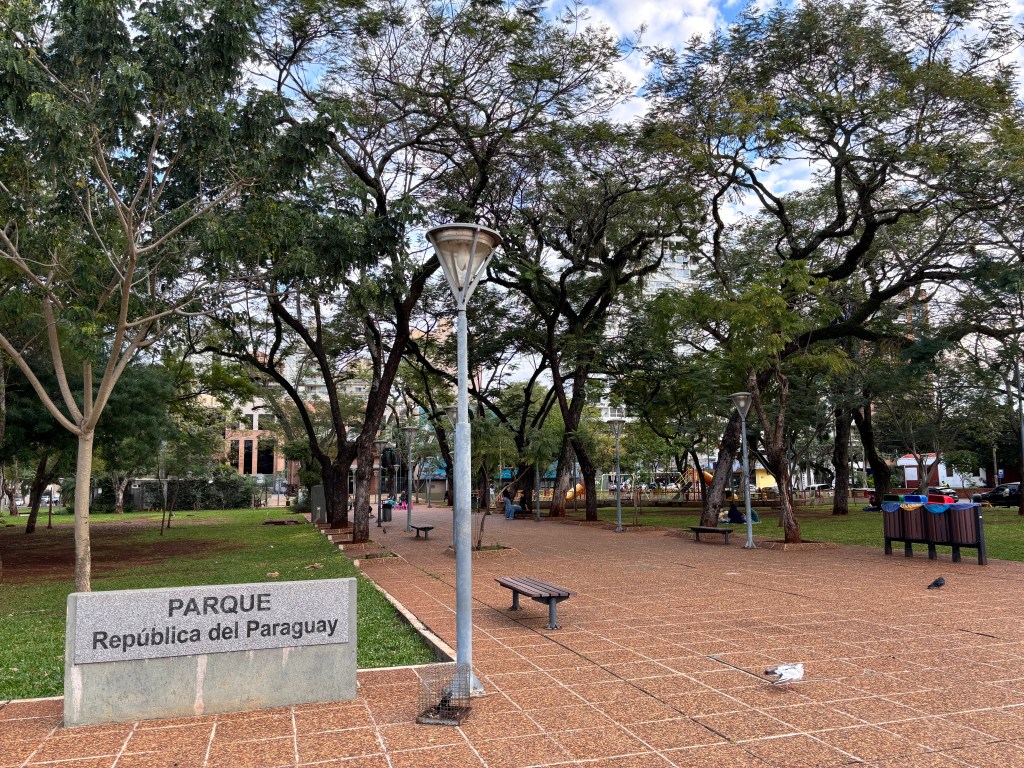
Overlooking the Paraná River, the Parque República del Paraguay – often called Parque Paraguayo – is one of Posadas’ most emblematic green spaces, steeped in history, culture, and symbolism.
Its origins date back to 1885, when the area formed part of the Barrio de los Cuarteles, home to the 3rd Regiment. Years later, the military presence moved elsewhere, and the site became known as the Barrio de la Asistencia, housing public health facilities.
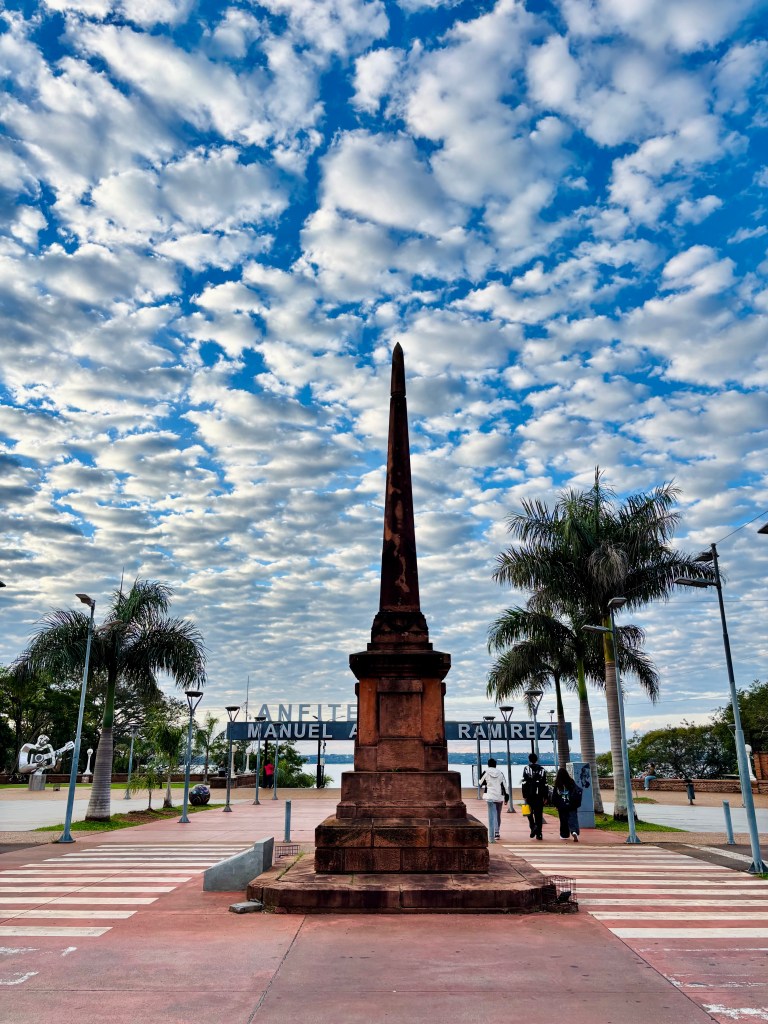
In 1926, a devastating tornado struck the Paraguayan city of Encarnación, just across the river. Posadas responded with vital humanitarian aid. In gratitude, the Paraguayan community gifted the city an obelisk made of Asperón stone.
Surrounding this monument, the area was transformed into a public park under Mayor Lindolfo Monzón in the early 1930s, with design input from renowned architect Alejandro Bustillo.
Officially inaugurated on October 12, 1929, the park was named República del Paraguay to honor the lasting friendship between the two nations. Over time, it evolved into a vibrant cultural hub. The Anfiteatro Manuel Antonio Ramírez, built in the early 1960s, became the stage for the Festival Nacional de la Música del Litoral. The Museo Regional Aníbal Cambas, founded in 1940, found its home here, preserving the history and traditions of Misiones and its indigenous peoples.
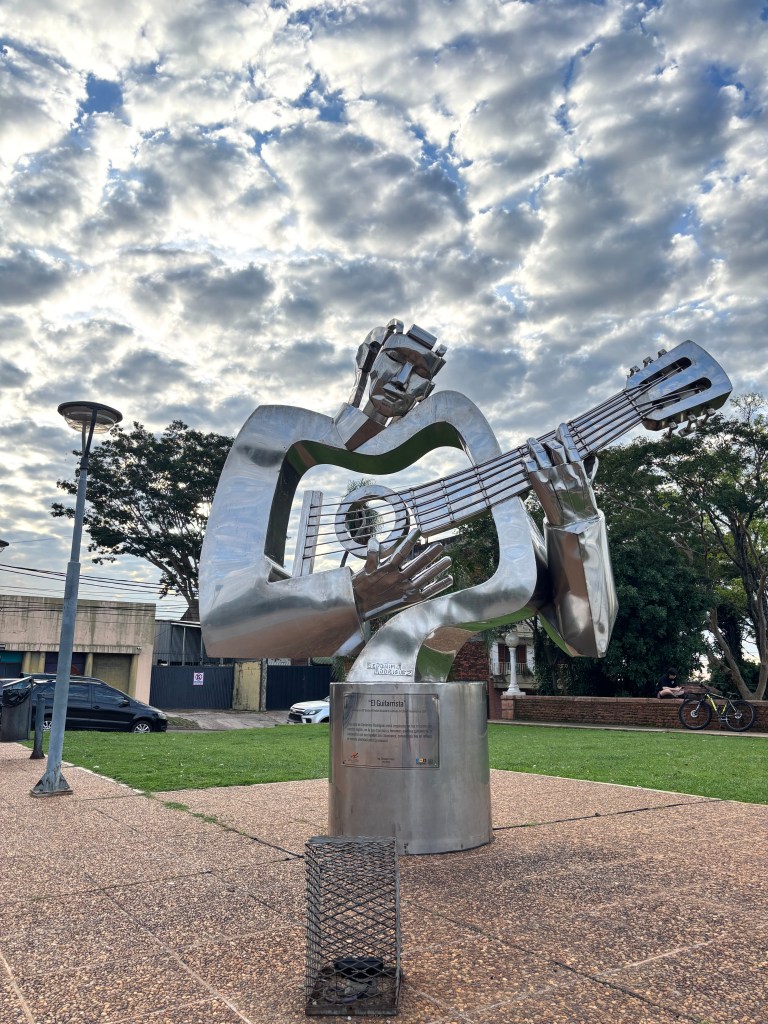
Today, Parque Paraguayo is much more than a historical landmark. It is a gathering place for festivals, fairs, and open-air activities, framed by monuments and cultural artworks such as El Guitarrista.
Whether you visit to learn about its past, enjoy a cultural event, or simply relax under its shady trees, the Parque República del Paraguay remains a living testament to solidarity, shared history, and the enduring bond between Argentina and Paraguay.
 My Misiones - A Foreigner's Guide to Misiones