
You wouldn’t expect to find Southeast Asian architecture in northeastern Argentina—but that’s exactly what makes this temple so remarkable. Tucked along Route 12, just a little further than the airport outside Posadas, it stands quietly apart from the usual tourist circuit.
A Community Far from Home
The story begins in the late 1970s and early 1980s, when refugees from Laos arrived in Argentina after the Vietnam War and the political upheaval that followed. A small group settled in Misiones, drawn by the familiar climate and river landscapes. Over time, they built a new life here—and with it, a temple that could carry their culture, religion, and memories into the future.
In 1988, Wat Lao Rattanarangsy was officially founded. Today, it remains an important place for the Laotian community in Posadas, serving as both a spiritual center and a space for cultural connection.
What You’ll See
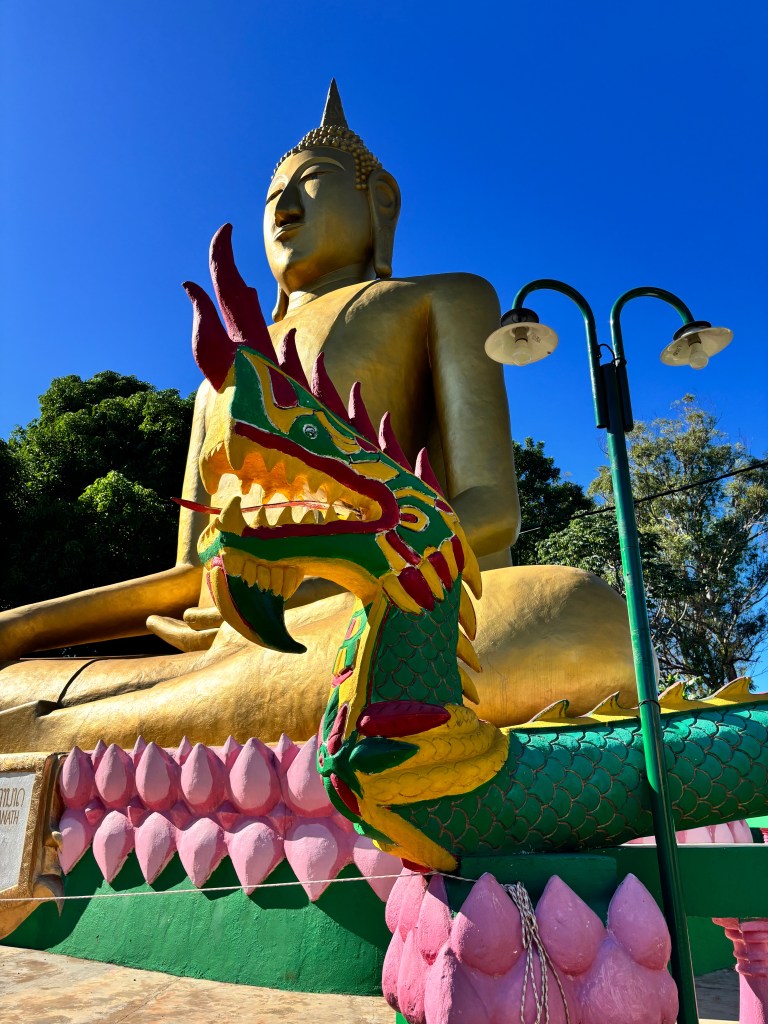
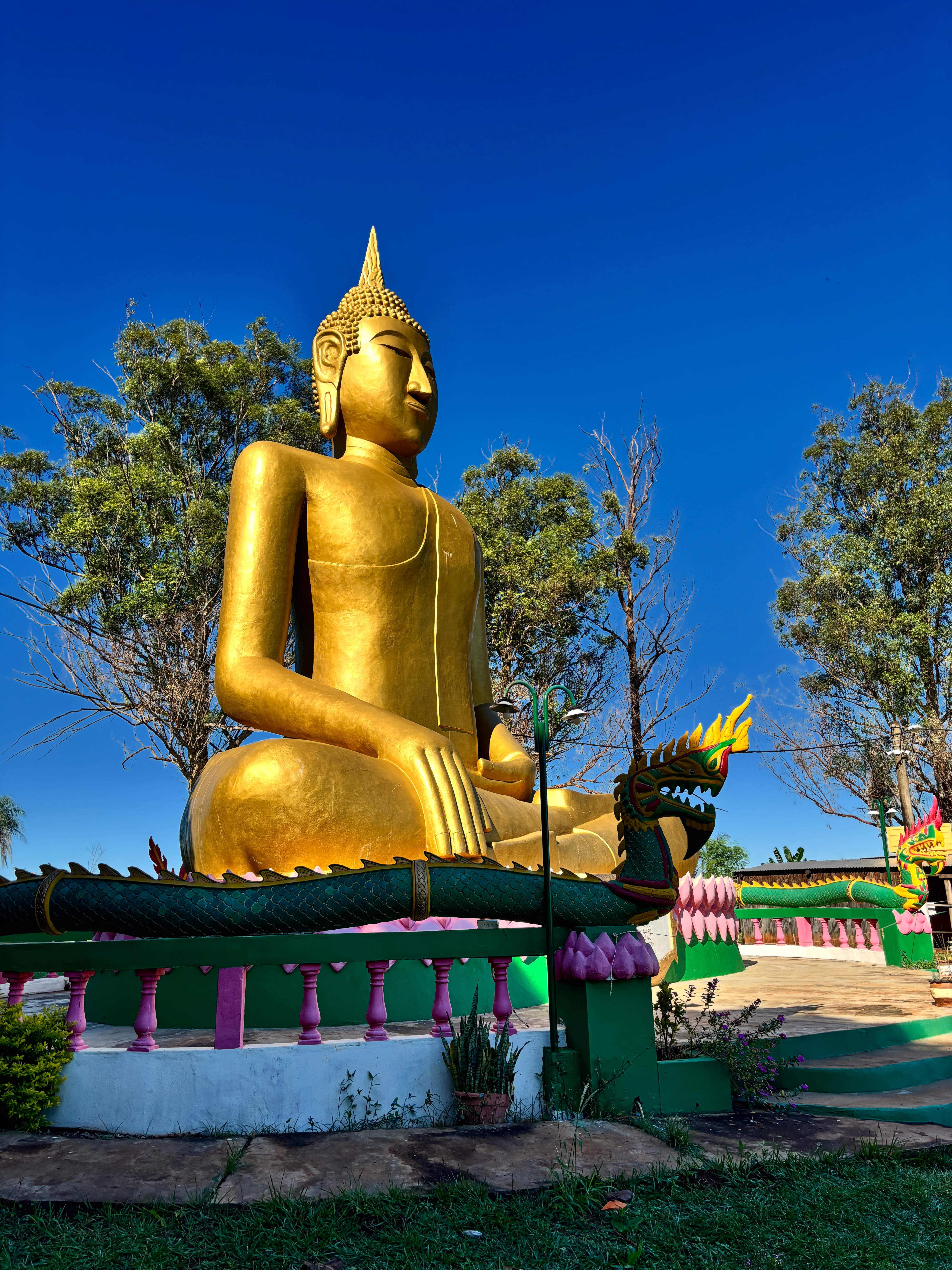
From the outside, the temple stands out right away. Its bright rooflines, golden details, and traditional Laotian decorations create a striking contrast to the surrounding houses. It’s a peaceful place—no crowds, no noise—just the sound of birds and, occasionally, soft chanting from inside.
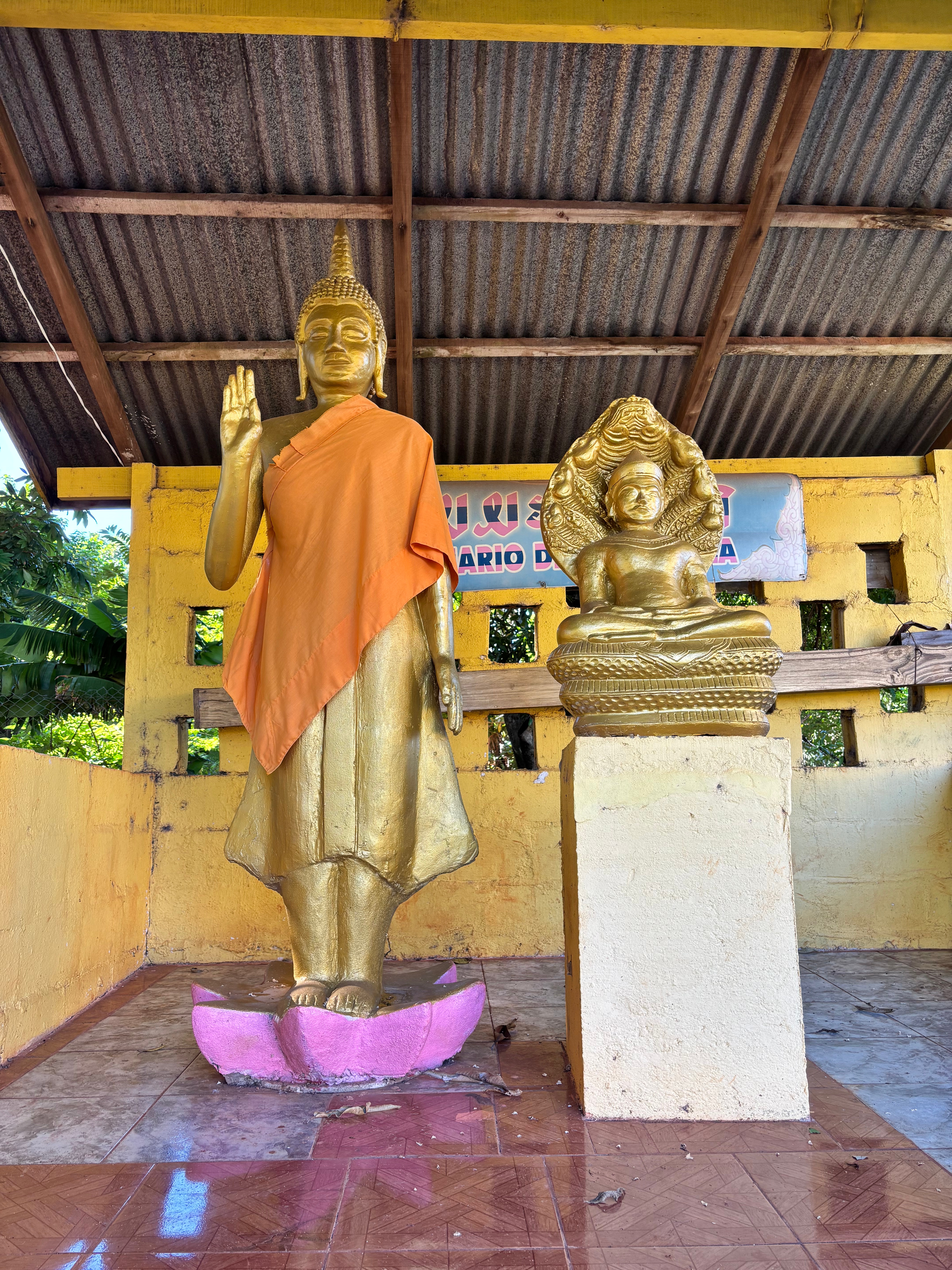
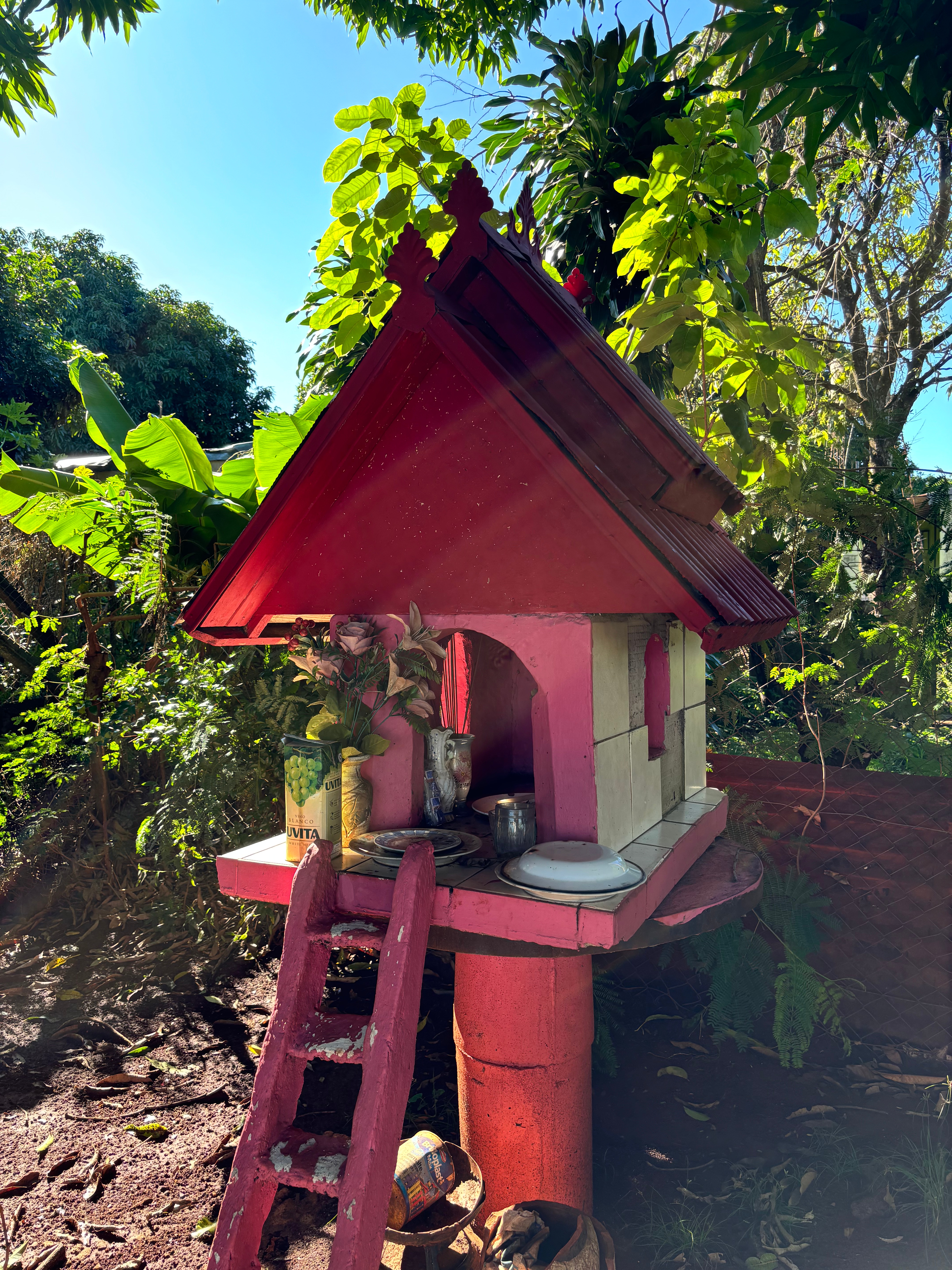
Step inside and the atmosphere shifts. The scent of incense, the quiet air, and the rows of Buddha statues invite you to slow down. The temple is decorated with murals, offerings, and religious symbols that reflect centuries of Theravada Buddhist tradition.
But this isn’t just a serene corner—it’s an active, living space where families gather, children learn Lao language and customs, and festivals like Pi Mai Lao (Laotian New Year) are celebrated with music, food, and prayer.
Why It Matters
Wat Lao Rattanarangsy isn’t on the main tourist route. But that’s exactly why it stands out. It offers a rare glimpse into the life of a small immigrant community that found a way to keep its traditions alive, thousands of kilometers from home.
In Misiones—a province already shaped by waves of migration—this temple is a quiet reminder of resilience, memory, and the many cultures that continue to find a home here.
 My Misiones - A Foreigner's Guide to Misiones