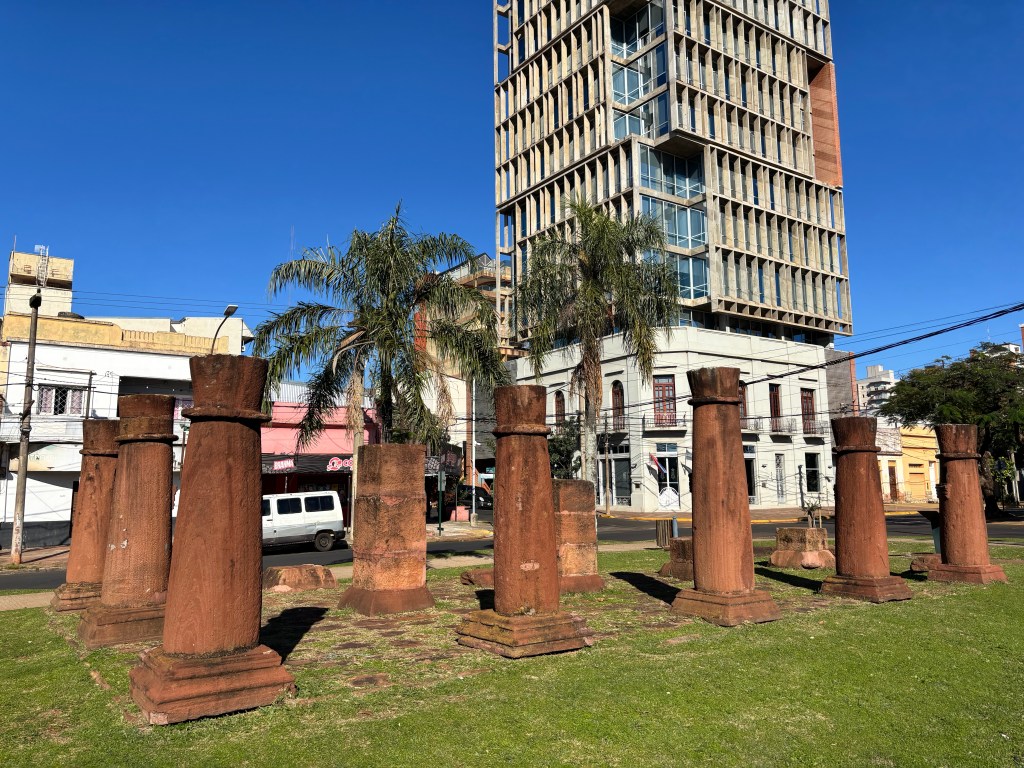
Right in the center of Posadas, at the corner of Roque Pérez and Buenos Aires, you’ll find something unexpected: a series of massive carved stone columns, carefully arranged on a small grassy strip between the lanes of city traffic. Most people walk past them without a second glance. But if you pause for a moment, you’ll notice something: a sign, a QR code—and a story worth telling.
These stones are not originally from Posadas. They come from the ruins of the Jesuit missions of Misiones—most likely Santa Ana, though some fragments may come from San Ignacio Miní or other reductions. In the 17th and 18th centuries, these missions were vibrant communities where Jesuit missionaries and Guaraní peoples lived, worked, and worshipped together. The architecture was impressive: stone churches with delicate carvings and harmonious design.
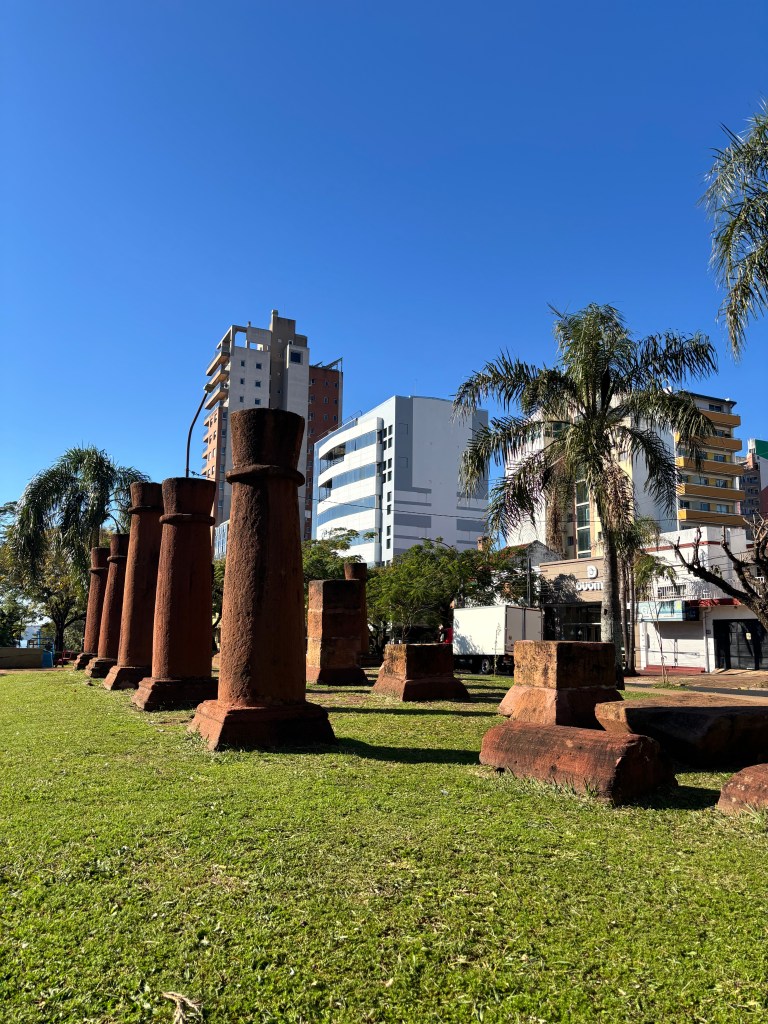
But in 1767, the Jesuits were expelled from Spanish territories, and their missions were abandoned. Over time, the buildings fell into decay. In the late 19th and early 20th centuries, some of the most valuable fragments were shipped to Buenos Aires, to be displayed in museums or public monuments as symbols of national heritage. Misiones, as a region, lost not only cultural treasures—but part of its own identity.
Then, in the 1960s, things began to shift. People in Misiones demanded that their history be returned. In 1968, a handful of these fragments were finally brought back—not to the mission sites themselves, but to Posadas, the provincial capital. That’s where they still stand today, quietly nestled between the noise of the modern city.
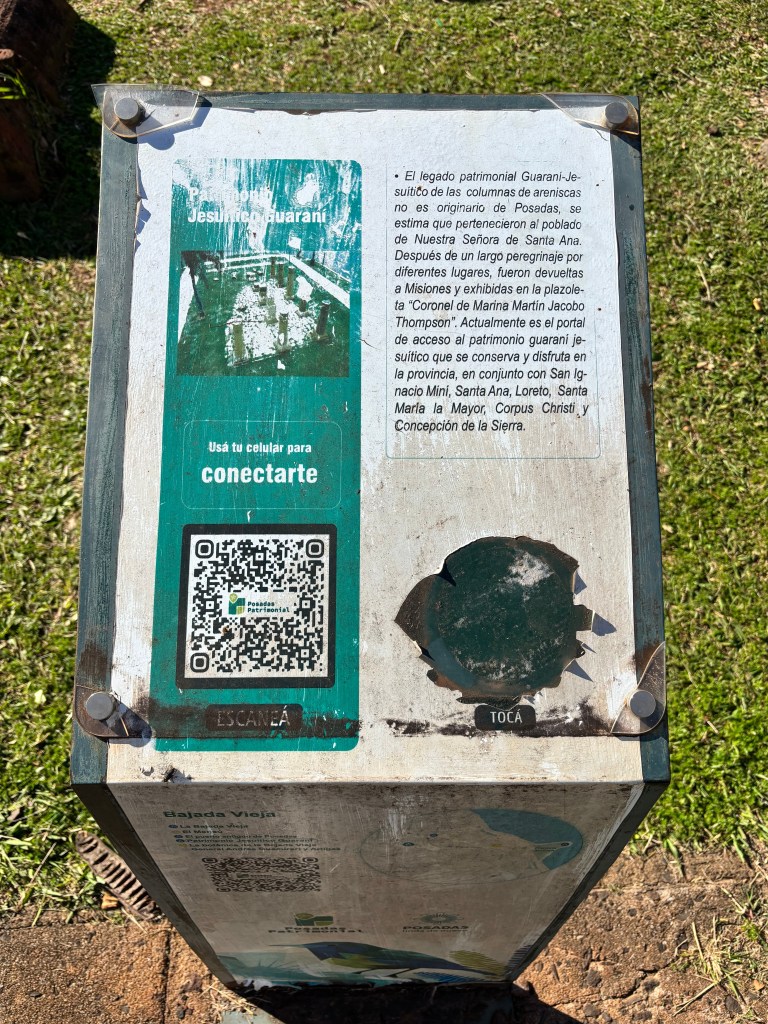
There is a small plaque and a QR code explaining their origin. But the display remains understated—easy to overlook, unless you’re curious. This urban corner becomes a space to reflect: on heritage, memory, and cultural justice.
 My Misiones - A Foreigner's Guide to Misiones